How Often Should I Feed My Cat?
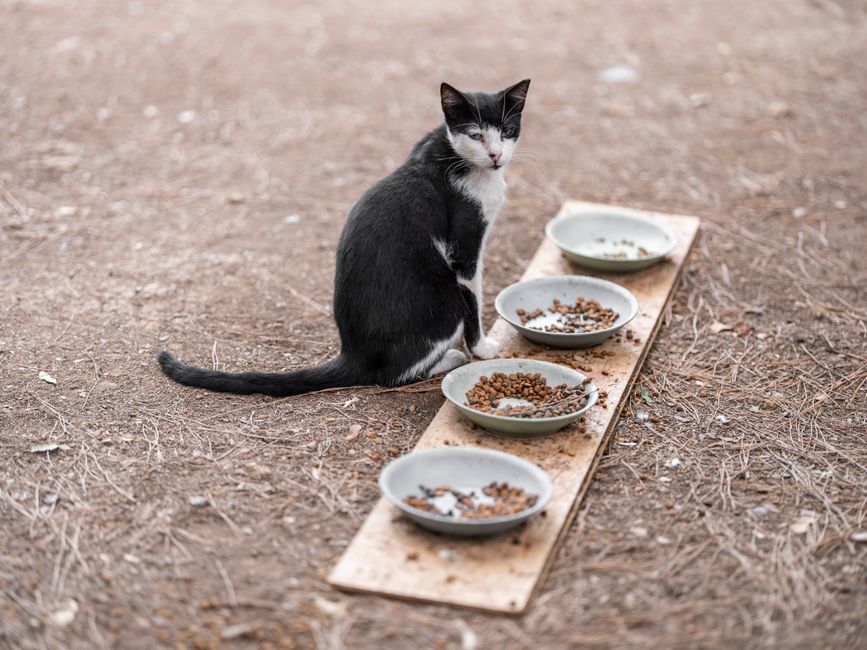
Photo by Engin Akyurt on Pexels
This content was created with AI assistance and is not a substitute for professional veterinary advice.
Kittens need frequent small meals, adult cats do well with at least two meals a day, and both the Cornell Feline Health Center and VCA Animal Hospitals recommend scheduled meals over free-feeding for most cats – the choice matters more for weight control than most owners realize.
Feeding Frequency By Life Stage
Cornell breaks it down clearly by age: kittens under six months do best with three meals a day, kittens six months to a year should move to twice-daily feeding, and cats a year and older can generally settle into once or twice a day. VCA recommends a slightly wider range for kittens specifically – three to four meals daily, broken into smaller portions to suit a still-developing digestive system. For seniors, Cornell notes cats 10 and older should generally stay on the same routine that worked as an adult, unless a vet recommends a change for a specific health reason.
Why Twice A Day Is The Practical Minimum
VCA points to a physiological reason behind the “at least twice daily” recommendation for adults: a cat’s stomach empties and triggers hunger signals after roughly 8-10 hours, so a single daily meal leaves a long stretch where a cat is running on an empty stomach. Two meals spread through the day avoids that gap and lines up better with how a cat’s digestion actually works, rather than being an arbitrary number.
Feeding Frequency At A Glance
| Life Stage | Recommended Frequency |
|---|---|
| Kitten, under 6 months | 3-4 meals a day |
| Kitten, 6 months to 1 year | 2 meals a day |
| Adult (1+ years) | At least 2 meals a day |
| Senior (10+ years) | Same as adult, unless a vet says otherwise |
Scheduled Meals vs Free-Feeding
Both sources land on the same conclusion: scheduled, portion-controlled meals are generally the better default over free-feeding (leaving food out to graze on all day). VCA is specific that free-feeding is not recommended for kittens at all, since it’s linked to juvenile obesity, binge-eating, and orthopedic problems tied to excess weight during growth. For adult cats, Cornell notes free-feeding “may be acceptable for some cats, but for others, it can result in overeating and inappropriate weight gain” – it depends heavily on the individual cat’s ability to self-regulate, which isn’t something you can assume in advance.
Scheduled meals also have practical upsides beyond weight: VCA notes they make it easier to notice appetite changes (an early sign of illness), simplify diet transitions or medication given with food, and make life easier if another pet joins the household later.
The Real Risk Of Getting This Wrong
Cornell is specific about what’s actually at stake with free-feeding-driven weight gain: overweight cats are “4.5 times more likely to develop diabetes” and “twice as likely to die in middle age (6-12 years).” That’s a striking enough figure that it’s worth treating feeding schedule as a real health decision, not just a matter of convenience – this is Cornell’s own cited figure specifically, not a universally standardized number, but it illustrates how much weight management genuinely matters for a cat’s long-term health.
What If My Cat Is A Picky Eater Or Free-Feeds Fine?
VCA acknowledges individual variation here – some adult cats genuinely self-regulate well on free-feeding, and for a cat that’s less food-motivated, one meal a day may be enough, even though two remains the generally preferred target. If you do free-feed, both sources agree any food left out should still be measured in daily portions (not unlimited) and refreshed daily rather than left sitting indefinitely. Food puzzle toys are a good middle ground VCA suggests – they add mental enrichment while naturally slowing down eating, without switching fully to strict scheduled meals.
Key Takeaways
- Kittens need frequent small meals (3-4 times daily under 6 months, tapering to 2 by a year); adults and seniors generally do well with at least twice a day.
- Twice-daily feeding isn’t arbitrary – it matches how long it actually takes a cat’s stomach to empty and trigger hunger again.
- Scheduled, portion-controlled meals are the safer default over free-feeding for most cats, and free-feeding is specifically discouraged for kittens.
- Weight gain from free-feeding carries real health stakes, including a meaningfully higher diabetes risk cited by Cornell – this is a health decision, not just a convenience choice.
FAQ
Should I switch my cat from free-feeding to scheduled meals gradually or all at once?
A gradual transition tends to go smoother – introducing set mealtimes while slowly reducing how much food is left out between them gives a cat time to adjust, rather than an abrupt change that can cause stress or food-guarding behavior around mealtimes.
Do indoor cats need fewer meals than cats with outdoor access?
Meal frequency itself doesn’t need to change based on indoor/outdoor access, but portion size often should – indoor cats are typically less active and can gain weight more easily on the same amount of food, so keeping an eye on body condition matters more than adjusting how many times a day they eat.
Could my cat vomiting after eating be related to meal size or frequency?
It’s possible – eating too quickly or too much in one sitting can contribute to vomiting shortly after a meal, and splitting the same daily amount into smaller, more frequent meals sometimes helps. That said, frequent vomiting after eating is also a reason to check in with a vet rather than assuming it’s purely a feeding-schedule issue.