Why Does My Dog Sleep on Me?
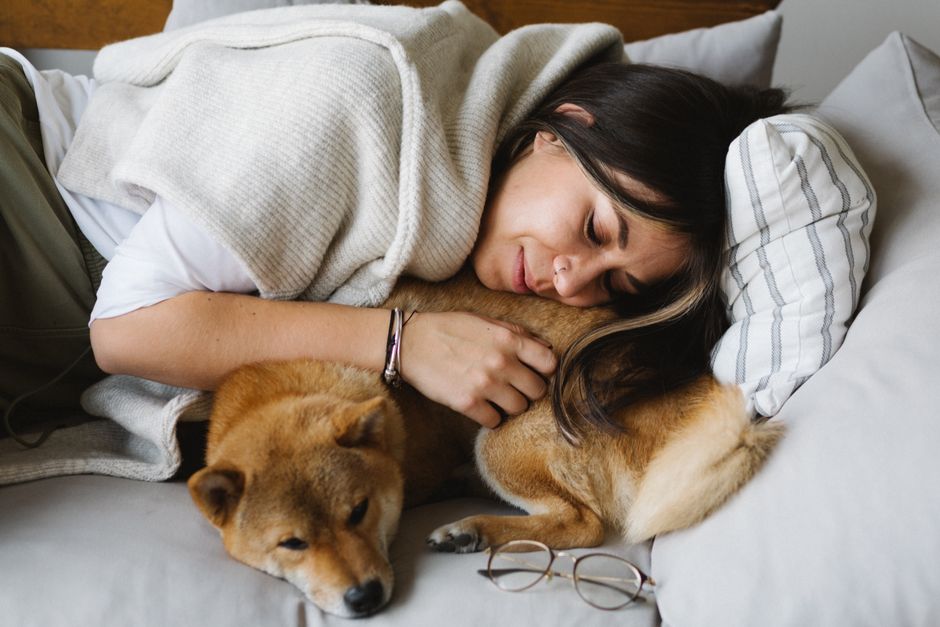
Photo by Meruyert Gonullu on Pexels
This content was created with AI assistance and is not a substitute for professional veterinary advice.
Mostly bonding, warmth, and inherited pack instinct – PetMD notes that “petting dogs releases the love hormone oxytocin for humans and dogs,” so both sides genuinely benefit from the closeness. It’s a real sign of trust, not something to worry about – and letting it happen doesn’t cause separation anxiety, despite an old myth suggesting otherwise.
The Bonding Reason Behind It
PetMD is direct about how central this is to the relationship: “you’re the center of their world” for most dogs. That’s not just a sentiment – the oxytocin release during physical closeness is a real, measurable part of why cuddling feels rewarding for both dog and owner, and it reinforces the bond every time it happens.
Pack Instinct: Warmth And Security
This behavior has deep roots. Hepper points to wolf pack behavior as the origin – “wolves are pack animals, causing them to lie with their other pack members for warmth and security,” and puppies naturally sleep piled together for protection and warmth from the very start. That instinct doesn’t disappear with domestication; it just gets redirected toward the humans a dog now considers its pack.
Sometimes It’s Protective, Not Just Affectionate
Hepper notes some dogs position themselves close specifically to provide a sense of safety – for themselves and for their owner – with certain breeds showing this instinct more strongly than others. PetMD adds a related but less common angle: occasionally, a dog draping itself over an owner can be a mild form of resource guarding, treating the person as something to claim. This is worth distinguishing from ordinary affection – PetMD is specific that it only becomes a real concern if it comes with growling, staring, or snapping, in which case it’s worth involving a veterinary behaviorist rather than reading it as simple cuddling.
Normal Cuddling vs Worth Watching
| Sign | Normal Bonding | Worth Watching |
|---|---|---|
| Context | Relaxed, happy, consistent habit | Sudden onset, tied to distress |
| Body language | Loose, calm | Tense, or paired with growling/staring |
| When it happens | Anytime, general affection | Specifically around departures |
| Other behavior | None | Anxiety, clinginess, resource guarding signs |
Debunking A Myth: Does Letting Your Dog Sleep On You Cause Separation Anxiety?
This is worth addressing directly, since it’s a common concern. PetMD’s position is clear: “contrary to outdated concerns,” letting a dog sleep on you does not trigger separation anxiety – if anything, PetMD notes “providing secure attachment to your dog can help prevent separation concerns.” The old advice to limit physical closeness to avoid creating a “needy” dog isn’t supported; secure bonding tends to work in the opposite direction.
When It’s Actually Anxiety, Not Bonding
The behavior itself isn’t the problem – but Hepper notes that dogs with genuine separation anxiety may sleep extremely close specifically to monitor an owner’s movements and departures, out of distress rather than simple affection. The distinguishing detail is context: ordinary bonding-driven closeness happens in a relaxed state regardless of what’s about to happen, while anxiety-driven closeness tends to intensify around cues that an owner is about to leave.
When To See A Vet
A previously independent dog that suddenly becomes clingy without an obvious explanation is worth mentioning to a vet – a real behavior change like that can point to anxiety, discomfort, or an underlying health issue rather than just an increase in affection. Similarly, any resource-guarding signs (growling, staring, snapping) tied to this behavior are worth addressing with a professional rather than assuming it will resolve on its own.
Key Takeaways
- Sleeping on you is mostly about bonding (oxytocin), warmth, and inherited pack instinct – it’s a genuine sign of trust.
- Letting your dog sleep on you doesn’t cause separation anxiety – secure attachment can actually help prevent it.
- Occasionally the behavior leans protective or even mildly territorial, which only becomes a real concern if paired with growling, staring, or snapping.
- A sudden, unexplained increase in clinginess in a previously independent dog is worth a vet visit rather than assuming it’s just extra affection.
FAQ
Should I stop letting my dog sleep on me if I eventually want it to sleep in its own bed?
You can transition gradually without treating the current habit as a problem – it’s more about building a positive association with a dog bed (treats, praise, a consistent spot) than about stopping the cuddling behavior itself, since the behavior isn’t harmful on its own.
Is it normal for a dog to only sleep on one specific person in the household?
Yes – dogs often form a strongest bond with whoever they feel safest with or spend the most calm, positive time around, which doesn’t mean they don’t care about other household members. It’s a preference, not a sign anything is wrong with the relationships with everyone else.
Does this behavior change as dogs get older?
It can, in either direction – some dogs become more attached to close contact as they age (sometimes tied to reduced vision or hearing, where physical closeness helps them feel secure), while others may sleep less on owners simply due to joint discomfort making certain positions less comfortable. A real change is worth noting rather than assuming it’s just normal aging.