How Often Should Rabbits Eat?
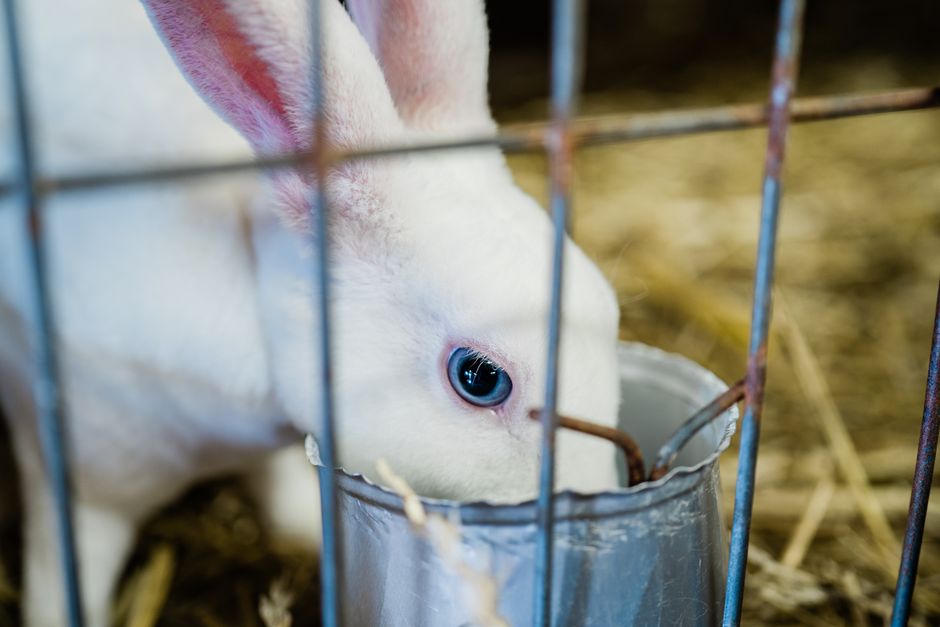
Photo by Jessica Lewis 🦋 thepaintedsquare on Pexels
This content was created with AI assistance and is not a substitute for professional veterinary advice.
Hay isn’t on a schedule – it should be available at all times – while pellets and vegetables generally follow a twice-daily rhythm. Unlike many pets, rabbits genuinely can’t skip meals safely: House Rabbit Society treats 12 hours without eating as an emergency, not just a missed feeding.
Hay: Available At All Times, Not On A Schedule
VCA Animal Hospitals puts it simply: “as nibblers, rabbits should have food available at all times,” and hay is the food that fills that role. Unlimited high-quality grass hay – timothy, orchard, or brome – should make up the majority of a rabbit’s diet, both for the fiber that keeps digestion moving and for the dental health benefit of constant grinding, which wears down teeth that grow continuously throughout a rabbit’s life.
Pellets And Vegetables: Twice A Day
While hay sits out constantly, pellets and vegetables are the parts of the diet that actually follow a schedule – most veterinary sources point to twice-daily feeding for these. VCA gives specific portions for adult rabbits: pellets at roughly 1/8 to 1/4 cup per 5 lbs of body weight, and 1/4 to 1/2 cup of leafy green vegetables daily, introduced gradually when trying something new so you can catch any digestive reaction early.
Rabbit Diet At A Glance
| Food | Amount | Schedule |
|---|---|---|
| Hay | Unlimited | Always available |
| Pellets | ~1/8-1/4 cup per 5 lbs body weight | Twice daily |
| Leafy greens | ~1/4-1/2 cup per day (adjust by size) | Twice daily, split |
| Water | Unlimited, fresh | Always available |
Why Rabbits Can’t Skip Meals Like Other Pets
This is the detail that makes rabbit feeding different from cats or dogs, where missing a single meal usually isn’t a big deal. Rabbits are hindgut fermenters – their digestive system relies on more or less continuous movement to function properly, and a gap in eating can let that movement slow or stop entirely, a condition called GI stasis. House Rabbit Society is direct about the threshold: “if your rabbit stops eating or producing feces for 12 hours or more, you should consider the condition an EMERGENCY.” That’s a genuinely different standard than most pets, and it’s worth internalizing rather than assuming a skipped meal will just resolve on its own.
Signs Of GI Stasis To Watch For
House Rabbit Society lists specific symptoms worth checking for, especially if a rabbit seems to be eating less:
- Extremely small or absent fecal droppings, sometimes clinging to the rabbit’s rear
- Droppings encased in mucus
- Unusual gut sounds – either loud, violent gurgling or complete silence
- Lethargy or loss of appetite
- Hunching in a ball, sometimes grinding teeth from pain
Any of these, especially paired with reduced eating, is a reason to treat it as urgent rather than wait and see.
What Increases The Risk
House Rabbit Society names several contributing factors worth managing proactively: psychological stress, dehydration, pain from an underlying issue like dental disease, intestinal blockages, and – directly tied to feeding – inadequate dietary fiber. Regular exercise also matters here in a way that’s easy to overlook: it helps strengthen the intestinal muscles themselves, supporting the same digestive movement that constant hay access is meant to protect.
When To See A Vet Immediately
The 12-hour rule is the practical bottom line: if a rabbit has gone that long without eating or producing droppings, House Rabbit Society is clear this needs a rabbit-savvy vet right away, not a wait-and-see approach. Don’t try to diagnose or wait out the specific cause at home first – the priority is getting ahead of GI stasis before it progresses, since outcomes get worse the longer it continues untreated.
Key Takeaways
- Hay should be available constantly, not fed on a schedule – it’s the foundation of a rabbit’s diet and digestive health.
- Pellets and fresh vegetables generally follow a twice-daily schedule, with portions scaled to body weight.
- Rabbits can’t safely skip meals the way many other pets can – House Rabbit Society treats 12 hours without eating or pooping as a genuine emergency.
- Small/absent droppings, unusual gut sounds, lethargy, and hunching are the specific signs of GI stasis worth watching for and acting on immediately.
FAQ
Do baby rabbits need to eat more often than adults?
Young, growing rabbits generally need more frequent access to food and often alfalfa hay/pellets (higher in calcium and protein) rather than the timothy-based diet recommended for adults, since their growth demands are higher. It’s worth checking with a rabbit-savvy vet for age-specific portions rather than applying adult guidelines directly to a young rabbit.
Can I just leave pellets out all the time like hay?
It’s not recommended – unlike hay, pellets are calorie-dense, and free-feeding them regularly is a common cause of obesity in pet rabbits. Measured, twice-daily portions keep calorie intake controlled while hay still handles the unlimited-access role safely.
My rabbit skipped one meal but otherwise seems fine – should I worry?
Keep a close eye on it rather than dismissing it outright – track whether droppings are still normal and whether eating resumes within a few hours. If it stretches toward the 12-hour mark, or droppings stop or shrink noticeably, that’s the point to treat it as the emergency House Rabbit Society describes rather than continuing to wait.