How Often Should I Walk My Dog?
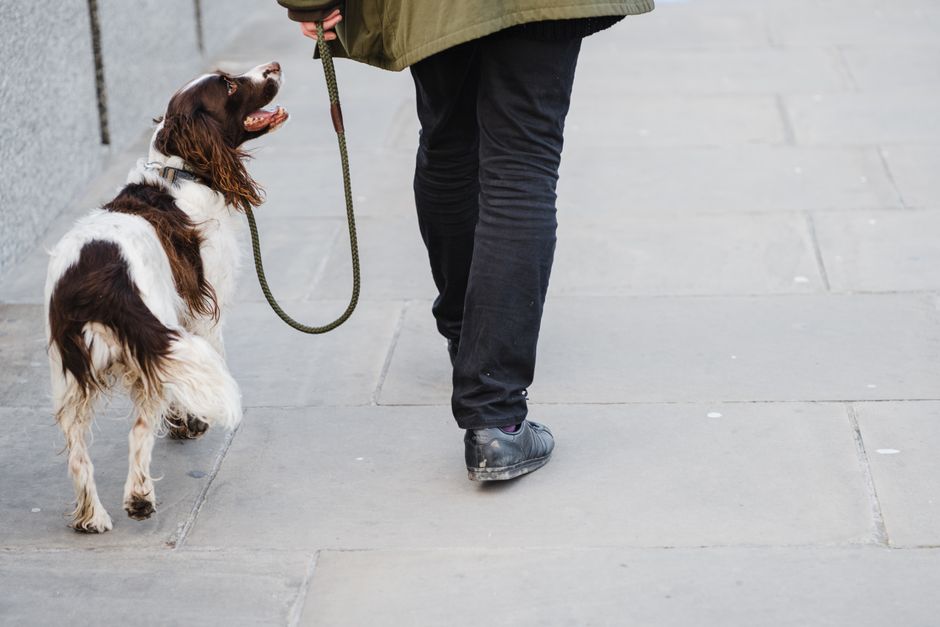
Photo by Olga Lioncat on Pexels
This content was created with AI assistance and is not a substitute for professional veterinary advice.
There’s no single universal number – PetMD puts a 20-30 minute daily walk as a reasonable baseline for a dog in good body condition, but the real answer shifts with breed, age, and health, and the AKC is clear that a consistent routine matters just as much as hitting an exact duration.
The General Starting Point
PetMD notes most healthy dogs can comfortably handle a 20-30 minute walk daily, while a dog in excellent condition might handle up to two hours – and on the other end, an overweight or out-of-shape dog might struggle with even 10 minutes at first. The AKC recommends starting smaller for inactive or out-of-shape dogs: 10-15 minute walks, building up gradually rather than jumping straight to a long walk. Both sources agree on the same underlying idea – the number should match the dog in front of you, not a fixed target everyone should hit on day one.
Why Breed And Energy Level Change The Answer
PetMD points to high-energy herding breeds like Collies and Australian Shepherds as needing considerably more exercise than lower-energy companion breeds like Yorkshire Terriers or Papillons. Individual personality matters too, even within a breed – PetMD notes some naturally athletic dogs of typically low-energy breeds (like Basset Hounds) differ meaningfully from their more couch-loving counterparts. Flat-faced (brachycephalic) breeds need extra caution regardless of energy level, since their airway structure makes them more prone to overheating during exercise.
Puppies Need Short, Frequent Walks, Not Long Ones
Both PetMD and the AKC agree puppies need short, frequent walks rather than one long outing. The AKC gives a concrete example: a 10-week-old puppy might do 10-minute walks two or three times a day. A few safety notes specific to puppies, per the AKC: hold off on walks in public, unclean areas until they’re fully vaccinated (typically around 16 weeks), and avoid hot pavement and extreme temperatures, since puppies regulate heat less efficiently than adult dogs.
Walk Patterns By Life Stage
| Life Stage | Pattern | Notes |
|---|---|---|
| Puppy | Short walks, several times daily | Hold off on public areas until fully vaccinated (~16 weeks) |
| Adult, out of shape | Start at 10-15 minutes | Build up gradually, don’t jump to a long walk immediately |
| Adult, good condition | Around 20-30 minutes daily as a baseline | Higher-energy breeds often need more |
| Senior | Shorter, slower, more frequent | Watch for limping, stiffness, reduced endurance |
Senior Dogs: Slower And More Frequent, Not Less
The AKC recommends senior dogs get slower-paced, frequent movement if they’re willing, since the mental enrichment of a walk – new sights, sounds, and smells – still has real value even at a reduced pace. PetMD adds that dogs around 9 years and older typically need less intense exercise, and that arthritis, muscle loss, or conditions like hypothyroidism can reduce stamina in middle-aged and senior dogs. Both sources point to the same practical approach: watch the individual dog’s response rather than assuming age alone dictates the answer.
Signs You’ve Got The Amount Wrong
Signs of over-exercise, according to PetMD and the AKC: limping during or after the walk, excessive panting, crashing immediately afterward, drinking water excessively, or difficulty getting on or off curbs. Any of these during or after a walk is a signal to scale back, not push through.
Signs of under-exercise show up differently – PetMD notes that dogs getting less than roughly 10-15 minutes of continuous activity daily are more prone to destructive or anxious behavior at home. If a dog seems restless, chews things it shouldn’t, or has excess pent-up energy, more consistent daily activity is often part of the fix.
Key Takeaways
- There’s no single correct number – PetMD’s 20-30 minutes daily is a reasonable general baseline, but breed, age, and body condition all shift it meaningfully.
- High-energy and working breeds typically need more than the baseline; flat-faced breeds need extra caution around heat regardless of energy level.
- Puppies need short, frequent walks rather than long ones, and should generally wait until they’re fully vaccinated before walking in public, unclean areas.
- Limping, excessive panting, or crashing after a walk signal too much; restlessness or destructive behavior at home can signal too little.
FAQ
Is one long daily walk better than several shorter ones?
Not necessarily – both approaches can meet a dog’s exercise needs, and which works better often comes down to the individual dog and your schedule. Puppies and seniors specifically tend to do better with shorter, more frequent walks rather than one long outing.
Do dogs without a yard need more walks than dogs with one?
Often yes in practice, since a yard lets a dog move around between walks in a way an apartment doesn’t – but a yard alone isn’t a substitute for a walk. Walks provide mental stimulation (new smells, sights, sounds) that unsupervised yard time typically doesn’t replicate.
What if my dog seems to want more walking than the general guidelines suggest?
Individual variation is real and expected – PetMD specifically notes personality differs even within a breed, and a dog that consistently seems to want and handle more activity without showing signs of over-exercise (limping, excessive panting, crashing afterward) can typically get more. Let the dog’s actual response guide adjustments rather than treating any single number as a hard ceiling.