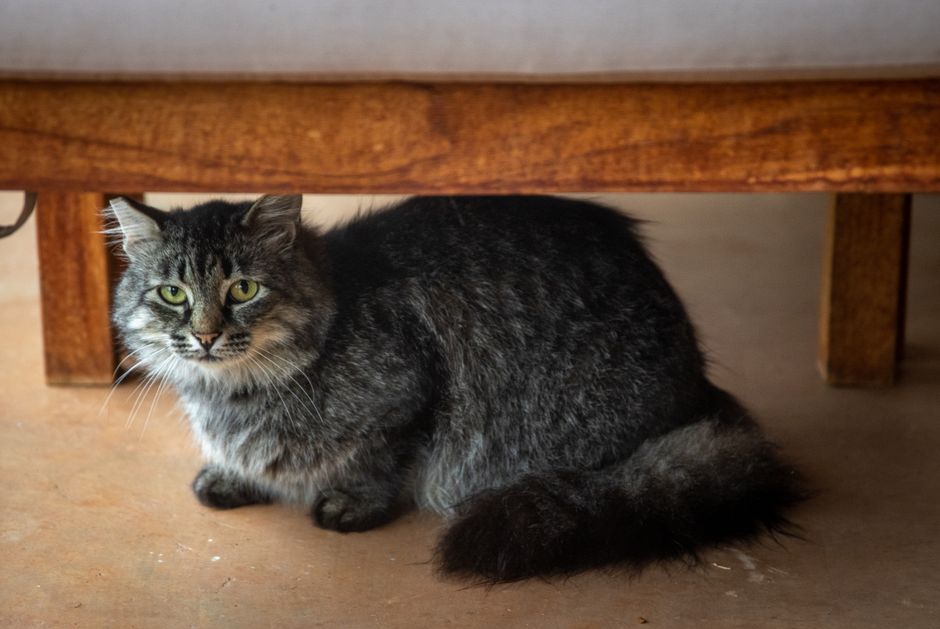
Why Does My Cat Hide?
Photo by Magda Ehlers on Pexels
This content was created with AI assistance and is not a substitute for professional veterinary advice.
Hiding is often a completely normal instinct – a response to a loud noise, a stressful change, or an unfamiliar visitor – but it’s also the first thing a sick or painful cat does, since cats are wired to mask symptoms rather than show them. Context and how long it lasts tell you which one you’re actually dealing with.
Hiding Is A Normal Instinct
According to Pets Furst Urgent Care, “tucking away in a quiet nook can be normal during a noisy day or after an unfamiliar visitor stops by.” Cats withdraw when they feel vulnerable, and common triggers include thunderstorms, fireworks, vacuum cleaners, houseguests, a new pet, or even rearranged furniture. Cats thrive on predictability, so even changes that seem small to a person – moving the couch, a weekend of visitors – can genuinely register as stressful to a cat.
Why Sick Or Painful Cats Specifically Hide
The same instinct that makes a cat retreat from a loud noise also makes it retreat when something feels physically wrong. In the wild, showing weakness invites predators, so cats are built to mask illness and pain rather than display it – and hiding is often the earliest, and sometimes the only, visible sign something is off. Pets Furst notes discomfort from injuries, arthritis, or dental issues, along with internal problems like gastrointestinal or kidney trouble, all prompt this same retreat to a quiet space.
The Body Language That Points To Pain
Hiding rarely shows up completely alone when pain is the cause. Pets Furst lists specific signals worth watching for alongside it: hesitation before jumping, stiffness when standing up, reduced grooming, and pulling away from touch. The combination matters more than any single sign – a cat that’s hiding and showing one or more of these is telling a more specific story than hiding by itself.
Normal Hiding vs Worth Watching
| Sign | Normal | Worth Watching |
|---|---|---|
| Trigger | Clear (loud noise, guests, change) | Unclear, or none |
| Duration | Hours, resolves on its own | Persists or worsens |
| Eating | Normal once the trigger passes | Reduced or refusing food |
| Other behavior | Otherwise normal when not hiding | Stiffness, reduced grooming, avoiding touch |
| Pattern | Occasional, situational | New for this cat, or escalating |
When To See A Vet Immediately
According to Pets Furst, seek veterinary attention when hiding comes with:
- Severe lethargy or loss of appetite
- Obvious discomfort moving
- Difficulty breathing
- Litter box avoidance or straining to urinate
Appetite loss deserves particular attention on its own. VCA Animal Hospitals notes that hepatic lipidosis – a serious liver condition – can develop after roughly three to four consecutive days without eating, and it’s fatal without aggressive treatment, though the prognosis is “reasonably good” when caught and treated. That’s a real enough risk that it’s worth contacting a vet well before that point – a cat that’s hiding and hasn’t eaten normally in about a day is worth a call, not a wait-and-see approach.
A previously social, out-and-about cat that suddenly starts hiding is itself a signal worth taking seriously, even without other symptoms yet – sudden behavior change is often the first thing owners notice, before more obvious signs appear.
How To Help A Hiding Cat Feel Safe
- Don’t force a cat out of hiding. Let them come out on their own terms once they feel safe – pulling a stressed cat out tends to increase anxiety rather than resolve it.
- Provide dedicated safe spaces – a covered bed, a box, or vertical space like a cat tree gives a cat somewhere to retreat that isn’t a stressful last resort.
- Keep routines consistent during predictable stressors (guests, a move, a new pet), since unpredictability is a big part of what drives situational hiding.
- Track eating and litter box habits during a hiding episode, not just the hiding itself – that’s the information that actually tells you whether it’s stress or something medical.
Key Takeaways
- Hiding is a normal instinct in response to loud noises, stress, or change – and it’s also the first sign of pain or illness, since cats are wired to mask symptoms.
- The body language paired with hiding (stiffness, reduced grooming, avoiding touch) tells you more than the hiding alone.
- A cat that hasn’t eaten normally in about a day, especially while hiding, is worth a vet call – hepatic lipidosis can develop within a few days of not eating and is a genuine emergency.
- A previously social cat suddenly hiding is worth taking seriously on its own, even before other symptoms show up.
FAQ
Is it normal for a cat to hide a lot after moving to a new home?
Yes – a new home is one of the bigger disruptions to routine a cat can experience, and extended hiding for the first days to a couple weeks is a common, normal adjustment. Keep food, water, and a litter box near where the cat is hiding so basic needs stay easy to meet without forcing interaction.
Should I pull my cat out of its hiding spot to check on it?
Generally no – it’s better to check from a distance (watching for movement, appetite, litter box use) than to physically remove a hiding cat, which can add stress on top of whatever’s already driving the behavior. If you’re worried enough to need a closer look, a calm, quiet approach works better than pulling them out.
Do some cats just hide more than others by personality?
Yes – baseline shyness and sensitivity to change vary a lot between individual cats, and some are simply more prone to retreating than others without anything being wrong. That’s exactly why knowing your own cat’s normal pattern matters – a shift from that individual baseline is more meaningful than comparing to how “most” cats behave.