Why Does My Cat Scratch the Couch?
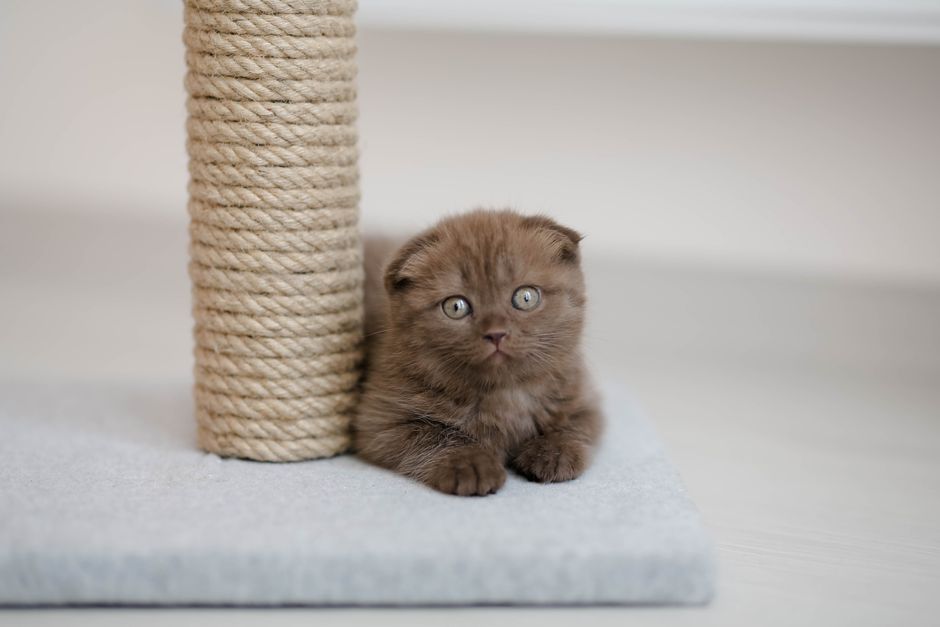
Photo by Melike B on Pexels
This content was created with AI assistance and is not a substitute for professional veterinary advice.
Scratching the couch isn’t misbehavior or spite – according to VCA Animal Hospitals, scratching is simply “normal behavior,” not something a cat is doing wrong. The real question isn’t how to stop it, but how to redirect it to a surface that isn’t your couch.
Scratching Is Normal – It’s Not Misbehavior
It’s easy to read couch scratching as destructive or defiant, but that framing misses what’s actually happening. Cats have an instinctive need to scratch, and it’s going to happen somewhere – the goal realistically isn’t eliminating the behavior, it’s giving it a better outlet than your furniture.
The Three Real Reasons Cats Scratch
Catster breaks it down into three consistent drivers:
- Claw maintenance. Cat claws grow in layers – “the newer, sharper claw grows inside the older, withering claw,” and scratching is how a cat sheds that outer layer to expose the sharp claw underneath. It’s grooming, not destruction.
- Communication and territory marking. VCA explains cats have scent glands in their paw pads, so scratching leaves both a visible mark and a scent signal that tells other cats “this is mine.” It’s a real form of communication, not random damage.
- Exercise and stress relief. Scratching paired with a full-body stretch works the forelimb and spine muscles – and Catster notes “cats tend to scratch more when distressed,” making it a self-soothing behavior as much as a physical one.
Why The Couch Specifically?
Furniture tends to check every box a scratching surface needs: it’s sturdy enough to hold a cat’s full-body pull, it’s usually in a central, high-traffic part of the home (exactly where a cat would want to leave a territorial mark), and fabric texture is genuinely appealing to claws. A cat isn’t picking the couch to spite you – it’s picking the couch because it happens to be the best-designed scratching surface already in the room.
Normal Scratching vs Stress-Driven Scratching
| Sign | Normal | Worth Addressing |
|---|---|---|
| Frequency | Occasional, part of routine | Sudden increase |
| Context | Stretching, after waking, marking | Tied to specific stressful events |
| Other behavior | Otherwise relaxed | Hiding, appetite change, other anxiety signs |
| Target | Consistent spots | Escalating or spreading to new surfaces |
How To Redirect It (Without Declawing)
VCA’s core strategy is placement and appeal, not punishment:
- Put a scratching post right where the damage is already happening, then gradually move it to a permanent spot over time – starting where the cat already wants to scratch works better than starting somewhere new.
- Add enrichment near the post – hiding spots, toys, or elevated perches – to make that area more appealing overall, not just the post itself.
- Experiment with texture and orientation. Cardboard, sisal fabric, and wood all appeal differently, and posts need to be sturdy enough and tall enough for a full vertical stretch, not just present.
- Protect furniture directly while the post takes hold. Catster recommends anti-scratch tape (cats dislike the sticky texture) or clear vinyl guards on furniture edges, since vinyl lacks the texture cats are drawn to.
Why Declawing Isn’t The Answer
This is worth being direct about: declawing is not a reasonable solution to furniture scratching. Catster describes it plainly as “inhumane,” comparing it to “cutting off a human’s fingers at the last knuckle” – it’s not a nail trim, it’s amputation of the last bone in each toe. Redirection with an appealing post, consistent placement, and furniture protection addresses the actual behavior without that cost.
Key Takeaways
- Scratching furniture is normal cat behavior – claw maintenance, territory marking, and stress relief – not spite or misbehavior.
- The couch appeals because it’s sturdy, centrally located, and has an inviting texture – not because a cat is being deliberately destructive.
- Redirecting to a well-placed, appealing scratching post works better than trying to eliminate the behavior outright.
- Declawing is not a humane alternative – it’s amputation, not a nail trim, and isn’t necessary to solve furniture scratching.
FAQ
Are nail caps or regular trims a good alternative to redirecting scratching?
They can help reduce damage as a supplement, but they don’t address the underlying need to scratch, so pairing them with an appealing scratching post is still worthwhile. Regular nail trims alone reduce the sharpness of any damage but won’t stop the behavior itself, since claw maintenance is only one of the three reasons cats scratch.
Does scratching furniture mean my cat is badly behaved or destructive by nature?
No – it means the behavior hasn’t been redirected to a more appropriate surface yet. Scratching itself is instinctive and universal in cats, so it’s not a reflection of temperament or training failure, just a matter of where that instinct is currently being expressed.
Will moving a scratching post to a new spot later confuse my cat or undo progress?
Gradual relocation, a little at a time, generally works fine and is exactly what VCA recommends – start where the cat already scratches, then shift the post slowly toward a more permanent location rather than moving it abruptly to an unfamiliar spot.