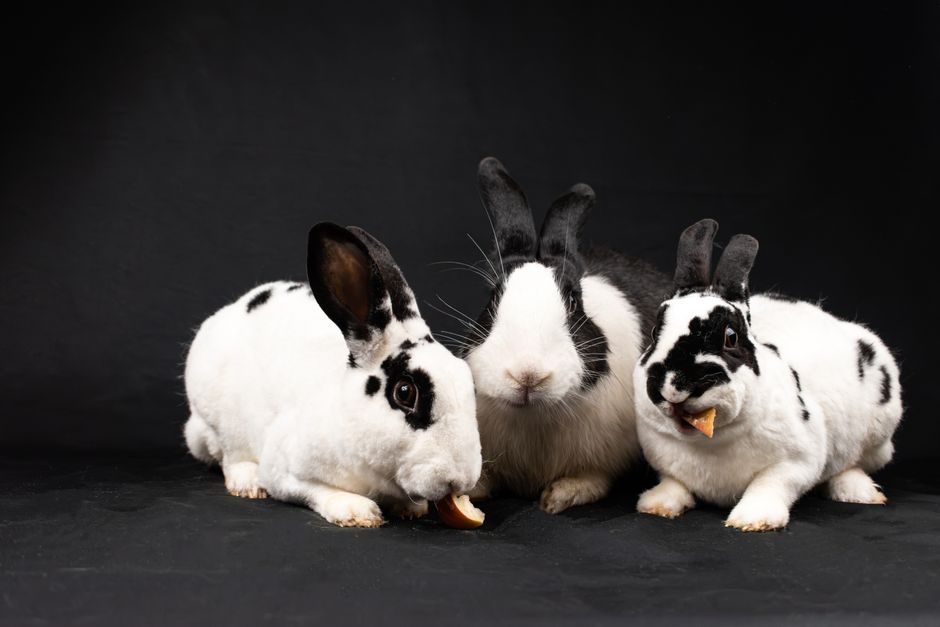
Best Rabbit Breeds
Photo by Nikolett Emmert on Pexels
This content was created with AI assistance and is not a substitute for professional veterinary advice.
Size is the most visible difference between rabbit breeds, but it’s far from the only one that matters. According to Chewy’s rabbit breed guide, choosing a breed means weighing temperament, grooming needs, and space requirements together – not picking by looks or size alone.
Rabbit Breeds Compared
| Breed | Weight | Temperament | Coat/Care Note |
|---|---|---|---|
| Himalayan | 2.5-5 lbs | Docile, laid-back | Thin, low-maintenance coat |
| Dutch | Not specified | Friendly | Low-maintenance coat |
| American Polish | Up to 3.5 lbs | Friendly | One of the smallest breeds |
| Holland Lop | Up to 4 lbs | Sweet | Regular grooming to prevent matting |
| Mini Lop | 4-6 lbs | Laid-back, independent | Thick coat, frequent grooming |
| Havana | 4.5-6.5 lbs | Calm (males); flighty (females) | Low-maintenance coat |
| Netherland Dwarf | ~2 lbs | Highly energetic | Prone to malocclusion if poorly bred |
| Mini Rex | ~4 lbs | Friendly | Plush fur; prone to sore hocks |
| Jersey Wooly | ~3 lbs | Gentle | Long coat, higher dietary protein needs |
| Flemish Giant | 13+ lbs, often 20+ | Calm (“gentle giant”) | Frequent grooming, needs real space |
The Top Pick For First-Time Owners
Chewy’s guide singles out the Himalayan specifically as its top recommendation for new owners, citing a genuinely docile, laid-back personality paired with a thin, low-maintenance coat – despite the breed’s distinctive pink eyes making it an unusual-looking first choice. A calm temperament combined with minimal grooming demands is exactly the combination that makes a breed forgiving of a first-time owner’s learning curve.
Small Breeds Aren’t Automatically The Easiest
This is worth knowing before assuming smaller means simpler. The Netherland Dwarf, at around 2 pounds, is extremely small but also highly energetic – a mismatch for anyone expecting a tiny rabbit to also be a calm one. It’s also specifically prone to malocclusion (dental misalignment) if poorly bred, a real health consideration that has nothing to do with size and everything to do with breeding quality. Mini Rex rabbits, similarly compact and friendly, carry their own breed-specific risk: their plush, unique fur type makes them more susceptible to sore hocks than other breeds.
Giant Breeds: Calm Temperament, Real Space Commitment
The Flemish Giant is the standout large breed – genuinely known as a “gentle giant” for its calm nature, but it’s a serious space and grooming commitment, growing to 13 pounds and often over 20, with frequent grooming needs to match its size. A calm temperament doesn’t offset the practical reality that a rabbit this large needs meaningfully more housing space than any breed on the smaller end of this list.
What Every Breed Needs, Regardless Of Size
According to the House Rabbit Society, unlimited hay is “the most important thing” in a rabbit’s diet, serving as the foundation for digestive health and for wearing down continuously growing teeth – this holds true across every breed on this list, from the 2-pound Netherland Dwarf to the 20-pound Flemish Giant. Beyond hay, the Society recommends measured pellets and fresh vegetables (with leafy greens making up the bulk of the vegetable portion), daily activity, spacious housing, and regular veterinary care – none of which change based on breed choice.
Key Takeaways
- The Himalayan stands out as the most beginner-friendly breed, combining a docile temperament with a low-maintenance coat.
- Small size doesn’t guarantee an easy rabbit – Netherland Dwarfs are notably high-energy despite their size, and carry a specific malocclusion risk tied to breeding quality.
- Mini Rex rabbits’ distinctive plush fur comes with a higher risk of sore hocks, worth knowing before choosing the breed for its coat alone.
- Flemish Giants combine a genuinely calm temperament with a serious space and grooming commitment – the breed’s size affects logistics more than day-to-day handling difficulty.
- Diet fundamentals (hay as the foundation, measured pellets, fresh vegetables) apply the same way across every breed, regardless of size.
FAQ
Is a Netherland Dwarf a good rabbit for a beginner because of its small size?
Not necessarily – despite being one of the smallest breeds, Netherland Dwarfs are highly energetic and can be more challenging to handle than their size suggests. A calmer breed like the Himalayan or Dutch is often a better starting point for a first-time owner than choosing based on size alone.
Do larger rabbit breeds like the Flemish Giant need a different diet than small breeds?
The core diet principles – unlimited hay as the foundation, measured pellets, and fresh vegetables – stay the same across breeds, but portions scale up with body weight. A Flemish Giant simply eats meaningfully more of everything than a 2-pound Netherland Dwarf, not a fundamentally different diet.
Why do some rabbit breeds need more grooming than others?
It comes down to coat type – breeds with thick, long, or plush fur (Mini Lop, Jersey Wooly, Mini Rex, Flemish Giant) need regular grooming to prevent matting or skin issues, while breeds with thin or short coats (Himalayan, Dutch, Havana) are considered low-maintenance by comparison. Coat type is worth weighing alongside temperament and size when choosing a breed.