Best Cat Toys for Indoor Cats
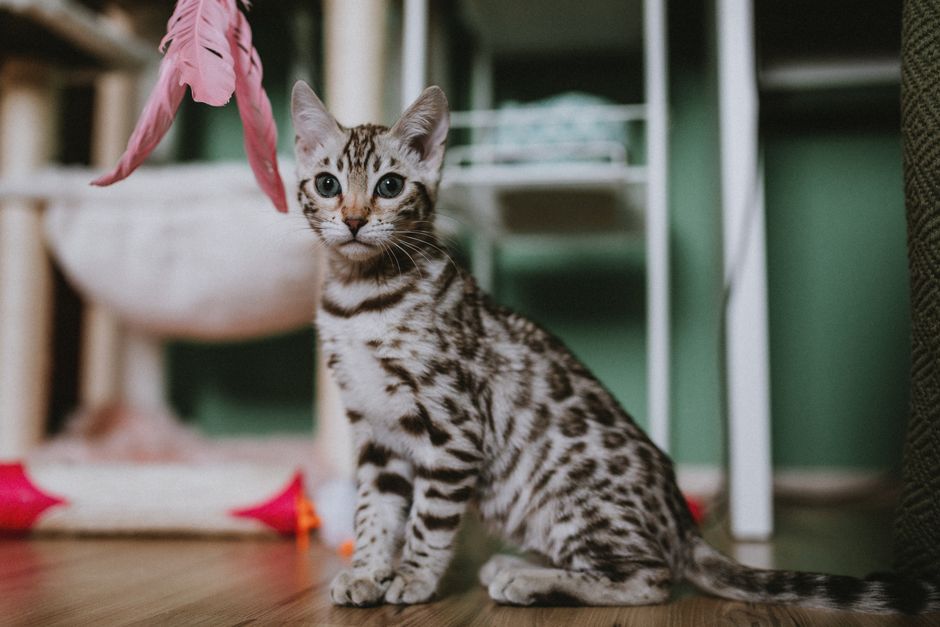
Photo by Helena Jankovičová Kováčová on Pexels
This content was created with AI assistance and is not a substitute for professional veterinary advice.
The best cat toys work because they let a cat complete the full hunting sequence – stalk, chase, catch, “eat” – not because of any particular price tag or gimmick. There’s also one real safety line worth knowing: string, ribbon, and dangling-accessory toys are a genuine emergency risk if left unsupervised.
Why Play Matters So Much For Indoor Cats
Cats are natural hunters, but most indoor cats never get to express that instinct on real prey. Left unmet, that drive doesn’t just disappear – a fair number of behavior issues owners struggle with (biting during petting, vocalizing or bothering owners at odd hours, general restlessness) trace back at least partly to boredom and an unmet predatory drive. Regular, structured play isn’t just entertainment – it’s a real behavioral tool.
What Actually Makes A Toy Effective
PetMD points to motion and unpredictability as the core ingredients – with a feather wand, the advice is to “keep the lure on the ground and relatively still for a while, then make it twitch or skitter,” mimicking how real prey actually moves. Individual cats have real preferences here too: some respond to “wild, flying bird-like movements,” others prefer something “scuttling on the ground.” Texture matters as well – plush, rubber, squeaky, and bell-equipped toy mice all appeal differently, and it’s worth trying a few types rather than assuming one texture works for every cat.
The Missing Piece Most Owners Skip: Finishing The Hunt
This is the detail that separates genuinely effective play from just tiring a cat out. PetMD is specific that completing the predatory sequence matters – “in nature, when the predatory drive is successfully completed, cats are left with something to eat,” and that completion is part of what makes play genuinely satisfying rather than just frustrating. This is exactly why food-dispensing toys work so well, and why PetMD recommends ending laser pointer sessions by tossing down a plush toy your cat can physically “kill” – a laser alone triggers the chase instinct but never lets a cat catch anything, which can leave cats frustrated rather than satisfied.
Toy Types And What They Satisfy
| Toy Type | Instinct Engaged | Supervision Needed |
|---|---|---|
| Wand/feather toys | Chase, stalk | Yes – interactive play only |
| Puzzle feeders | Problem-solving, foraging | No – safe for solo use |
| Tunnels | Stalking, concealment | No |
| Crinkle balls, catnip mice | General chase/bat play | No |
| Laser pointer | Chase (needs a real “catch” after) | Yes – pair with a physical toy |
Toys Vets Recommend For Unsupervised Solo Play
Hill’s Pet recommends feeding/puzzle toys, crinkle balls, catnip mice, and feather wands as generally good options – though as covered below, wands specifically need to come out only during supervised sessions, not stay out as a toy a cat can access alone.
The Toys That Need Supervision – And Why
Here’s an apparent contradiction worth resolving directly: PetMD holds up wand toys as one of the most effective tools for hunting-style play, while Hill’s Pet specifically warns to “avoid letting your cat play with streamers, yarn, wands with dangling toys, and toys with accessories sewn or glued on, as these can easily be disassembled by a feisty kitty.” Both are right – the difference is supervision. A wand toy is excellent during an active, supervised play session, and should be put away afterward rather than left out as something a cat can chew apart alone.
The Real Danger: String, Ribbon, And Linear Foreign Bodies
This is worth taking seriously, not treating as a minor caution. VCA Animal Hospitals explains the mechanism: if a cat swallows something long and thin – string, yarn, ribbon, tinsel – and one end gets caught (commonly at the base of the tongue), the intestines try to move the material forward but instead bunch up around it “like fabric gathering on a drawstring.” That creates a sawing motion against the intestinal wall that can tear it, leading to peritonitis – a life-threatening abdominal infection. Watch for vomiting, loss of appetite, dehydration, lethargy, or abdominal discomfort.
Hill’s Pet is direct about what to do if you see string coming from your cat’s mouth: do not pull it. “If you try to remove the string yourself, you risk damaging the esophagus and causing choking or vomiting that could result in aspiration pneumonia.” Head to a vet immediately instead, and call ahead so they know you’re coming.
Building A Rotation
A reasonable target is 5-10 toys kept in rotation, swapped periodically to keep novelty up, alongside a scratching post and roughly two dedicated interactive play sessions a day. Electronic and motorized toys can supplement this, but they’re not a substitute for hands-on play with you – the engagement and predictability of a person actually running a wand toy tends to hold a cat’s interest more deeply than any toy operating on its own.
Key Takeaways
- The most effective toys let a cat complete the full hunting sequence – stalk, chase, catch, “eat” – not just chase endlessly.
- Wand toys and lasers are genuinely effective for supervised, interactive play, but should be put away afterward, not left out for solo access.
- Puzzle feeders, crinkle balls, and catnip mice are solid choices for safe, unsupervised solo play.
- String, ribbon, and similar linear materials are a real emergency risk if swallowed – never pull visible string from a cat’s mouth, and get to a vet immediately instead.
FAQ
Are laser pointers bad for cats since they can never actually catch the light?
Not inherently bad, but they’re incomplete on their own – the fix PetMD recommends is ending every laser session by tossing down a physical toy your cat can actually catch and “kill,” so the predatory sequence gets to finish rather than leaving your cat wound up with nothing to show for it.
How many toys does my cat actually need at once?
Fewer toys visible at once, rotated regularly, tends to work better than a huge pile left out permanently – a working range of 5 to 10 toys in rotation keeps novelty high without overwhelming a cat with too many options sitting out at the same time.
Is catnip necessary, or just a nice bonus?
It’s entirely optional – not all cats even respond to it (the sensitivity is genetic, and a meaningful portion of cats simply don’t react to it at all), and toys work fine for cats without it based on motion, texture, and play structure alone. Treat it as a bonus for cats that do respond, not a requirement for effective play.