Why Does My Dog Lick Me?
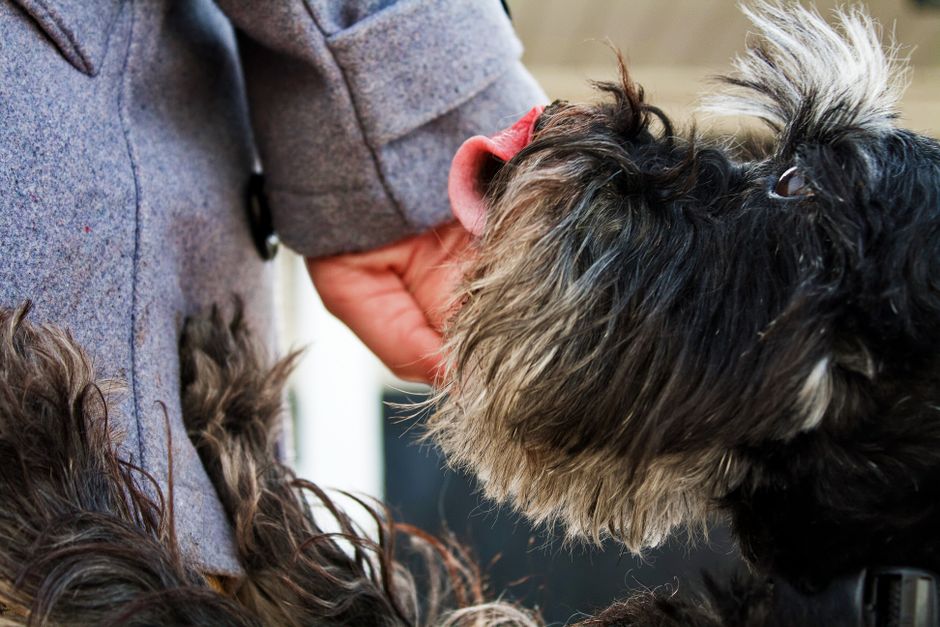
Photo by Matthias Cooper on Pexels
This content was created with AI assistance and is not a substitute for professional veterinary advice.
Dogs lick people mainly out of affection and an instinctive greeting behavior passed down from puppyhood – but licking that’s frequent, hard to interrupt, or new can signal stress, boredom, or an underlying medical issue.
The Real Reasons Dogs Lick People
Licking almost always traces back to one of these:
- An instinct from puppyhood. According to the AKC, puppies lick their mother’s face and muzzle to encourage her to regurgitate food – a behavior that, for many adult dogs, evolves into a ritualized greeting rather than an actual food request.
- Taste. Human skin is slightly salty, especially after sweating during exercise, and the AKC notes that some dogs simply enjoy how you taste – it’s less about sentiment than it might seem.
- Affection and bonding. Licking triggers the release of endorphins in a dog’s brain, according to PetMD, which can promote feelings of calmness and connection for the dog doing the licking.
- Submission or appeasement. In a dog’s social framework, licking can be a sign of deference – lower-ranking dogs often lick higher-ranking pack members, per the AKC, and some dogs extend that same behavior to their owners.
- Attention-seeking. Dogs learn quickly what gets a reaction. If licking reliably gets you to talk to, touch, or look at your dog, PetMD notes that dogs will use it to initiate interaction.
- Exploration. Hands, faces, and feet concentrate more sweat and scent than other areas, making them natural targets when a dog is investigating something new about you.
Why Excessive Licking Shouldn’t Be Waved Off
Because licking reads as affectionate, it’s easy to miss the point where it shifts from a greeting into a coping mechanism or a symptom. Left unaddressed, stress- or boredom-driven licking can intensify into a harder-to-interrupt, almost compulsive pattern – and a medical cause behind it, like allergies or pain, doesn’t resolve on its own just because the licking still looks like normal affection on the surface. The distinction that actually matters isn’t whether your dog licks you – most dogs do – it’s whether the pattern has changed.
Normal Licking vs. Signs Worth Watching
| Sign | Normal | Worth A Closer Look |
|---|---|---|
| Timing | Greetings, affection, play | Constant, or your dog seeks you out specifically to lick |
| Response to redirection | Stops easily when you redirect | Hard to interrupt, resumes immediately |
| Other behavior | Relaxed, normal appetite and energy | Paired with self-licking, stress signals, or appetite changes |
| Onset | Consistent, long-standing habit | Started suddenly or has clearly intensified |
How To Manage Excessive Licking
- Rule out a medical cause first, per the AKC’s own recommendation – allergies and pain are common enough that it’s worth a vet check before assuming licking is purely behavioral.
- Redirect to an incompatible activity, like a puzzle toy, a game of fetch, or a quick trick-training session, so the energy behind the licking goes somewhere else.
- Use a lick mat with a dog-safe spread to give a licking urge a constructive, contained outlet, a specific tool the AKC recommends for this.
- Make sure exercise and attention needs are actually being met – boredom-driven licking often eases once a dog has enough physical and mental outlets during the day.
- Avoid a big reaction every time it happens if attention-seeking seems to be the driver – a dramatic response, even a negative one, can reinforce the exact behavior you’re trying to reduce.
When To See A Vet Immediately
- Licking that’s sudden or noticeably more frequent than usual – a real change in pattern is the strongest signal something’s different, not just a personality quirk.
- Licking that’s compulsive or hard to interrupt, especially if it looks distressed rather than affectionate.
- Licking paired with limping, redness, swelling, hair loss, rash, odor, vomiting, diarrhea, lethargy, or appetite changes – these point toward a medical cause and are worth a vet visit, not a behavior fix.
Tools That Help With Compulsive Licking
- Lick mats give a dog a dog-safe, contained way to lick that isn’t directed at you or at their own skin.
- Puzzle feeders and interactive toys redirect attention-seeking or boredom-driven energy into a task.
- Trick-training kits build in short mental workouts that can reduce excess energy behind repetitive behaviors.
- Calming aids, like pheromone diffusers, are sometimes used alongside behavioral changes when stress or anxiety appears to be a factor.
Key Takeaways
- Occasional licking is mostly affection and an instinct traced back to puppyhood greeting behavior – not something to worry about on its own.
- The real signal to watch for is a change: licking that’s suddenly more frequent, harder to interrupt, or paired with other symptoms.
- Allergies and pain are common medical causes behind a real increase in licking, according to both the AKC and PetMD.
- Redirecting to puzzle toys or lick mats works well for boredom- or attention-driven licking, but a medical cause should be ruled out first.
FAQ
Why does my dog lick my face specifically?
It traces back to the same instinct that has puppies licking their mother’s muzzle to encourage her to regurgitate food – your face gets targeted for the same reason a mother dog’s face would, even though your dog obviously isn’t expecting you to actually do that.
Is it true dogs lick people because we taste salty?
Yes – human skin carries salt, and that’s more pronounced after sweating during exercise. Some dogs are simply more insistent about licking right after you’ve worked out, and taste, not sentiment, is likely why.
Can I accidentally train my dog to lick more?
Yes – if you consistently react strongly to licking, even by laughing, pushing your dog away dramatically, or giving immediate attention, your dog can learn that licking reliably gets a response and repeat it more often as a result.