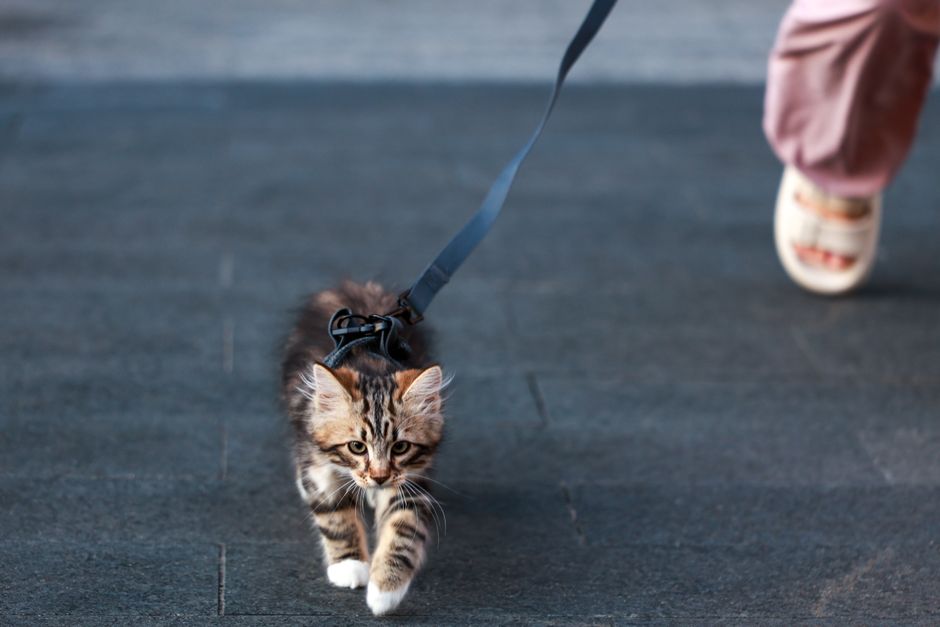
Why Does My Cat Follow Me Everywhere?
Photo by Pi Pi on Pexels
This content was created with AI assistance and is not a substitute for professional veterinary advice.
Most cat-following is a sign of a secure bond with you, driven by curiosity, food association, or attention-seeking – but if it’s new, sudden, or paired with other changes, it can also point to stress, separation anxiety, or an underlying medical issue like hyperthyroidism.
The Real Reasons Your Cat Follows You Around
Following behavior almost always comes down to one of these:
- Bonding and security. Cats in close-knit social units stay near each other for protection, according to PetMD – a cat trailing you through the house is often just choosing to be near someone it trusts.
- Food association. Cats quickly learn who controls the food bowl. If your cat shadows you especially around mealtimes, it’s likely connected your presence with feeding, per PetMD.
- Curiosity. Cats investigate new activity and unfamiliar spaces – opening a door or starting a new task is often enough to trigger a follow.
- Attention-seeking and boredom. Catster notes that indoor cats without enough physical and mental stimulation often follow their owners specifically to get engagement they aren’t getting elsewhere.
- Play and hunting instinct. Stalking and trailing you can simply be a form of play, satisfying a natural hunting drive even when there’s nothing to actually hunt.
- Separation anxiety. Cats can experience separation anxiety much like dogs do, according to Catster – this shows up as following that’s less about curiosity and more about not wanting you out of sight at all.
- An underlying medical issue. Both PetMD and Catster point to hyperthyroidism specifically as a condition that increases hunger and can make a cat noticeably more insistent about following and pestering for food – Catster notes it’s more common in middle-aged and older cats, though it can happen at any age.
When Following Becomes More Than Affection
Most of the time, a cat that follows you is just a well-bonded cat, and that’s worth nothing more than enjoying. But treating all following as automatically “just personality” can mean missing something that’s actually treatable. Separation anxiety left unaddressed tends to get worse, not better, and a medical cause like hyperthyroidism will keep progressing untreated – both are far easier to manage caught early than after months of being written off as quirky behavior. The goal isn’t to worry every time your cat trails you into the kitchen – it’s to notice when the pattern itself changes.
Normal Following vs. Signs Something’s Off
| Sign | Normal Bonding | Worth A Closer Look |
|---|---|---|
| Pattern | Follows sometimes, settles when you’re busy | Follows constantly, seems distressed out of sight |
| Appetite | Normal, consistent | Sudden increase in hunger or food-seeking |
| Onset | Been this way for a while | Started suddenly or has clearly gotten more intense |
| Time alone | Relaxed when left alone | Vocalizing, destructive behavior, or accidents when alone |
How To Respond To A Velcro Cat
- Rule out hunger first. Keep feeding times consistent so following isn’t being reinforced as the way to get fed on demand.
- Add structured daily play. A few short interactive sessions with a wand toy can meet the need behind boredom-driven or attention-seeking following.
- Give your cat its own enrichment, like a window perch or cat tree, so following you isn’t the only stimulating thing available in the house.
- Don’t make departures and arrivals a big event. Calm, low-key comings and goings help cats prone to separation anxiety stay relaxed rather than fixating on your movements.
- Track any other changes – appetite, thirst, energy, litter box habits – alongside the following. That pattern is what tells you whether this is bonding or something to flag to a vet.
When To See A Vet Immediately
- A sudden increase in following paired with increased hunger or thirst – this combination is a known pattern with hyperthyroidism, according to both PetMD and Catster.
- Following that comes with vomiting, diarrhea, breathing changes, or trouble walking normally – these aren’t behavioral, they need a medical evaluation.
- Signs of real separation anxiety, like destructive behavior, prolonged distress, or accidents outside the litter box specifically when you’re gone – this is manageable, but it’s worth addressing directly rather than hoping it fades.
Toys And Tools For A Clingy Cat
- Interactive wand toys redirect attention-seeking energy into a play session instead of constant trailing.
- Puzzle feeders give a food-motivated cat something to work for, rather than reinforcing following you to the kitchen.
- A window perch or cat tree gives an independent spot for stimulation that doesn’t depend on you being in the room.
- An automatic feeder can help keep food timing predictable and reduce mealtime-driven following.
Key Takeaways
- Most following is a sign of a secure, affectionate bond – it isn’t automatically a problem on its own.
- The real signals worth watching for are changes: a sudden increase in following, hunger, or distress specifically when alone.
- Hyperthyroidism is a specific, well-documented medical cause of increased hunger-driven following, especially in middle-aged and older cats.
- Boredom and separation anxiety can both look like “following too much,” but they need different fixes – enrichment for one, calmer routines for the other.
FAQ
Is it bad if my cat follows me into the bathroom?
No – it’s one of the most common places owners report being followed, and it usually ties back to the same social-bonding instinct, plus cats generally dislike closed doors creating a barrier between them and you. It’s not a separate behavior category from following elsewhere in the house.
Should I ignore my cat when it follows me to reduce the behavior?
It can help if the following is purely attention-seeking, since responding every time can reinforce it – but ignoring it isn’t the right first move if you haven’t ruled out hunger, anxiety, or a medical cause first. Address the underlying reason before trying to train the behavior away.
Can how much my cat follows me change as they get older?
Yes – a senior cat becoming noticeably clingier is worth paying closer attention to rather than assuming it’s just “getting more affectionate with age.” Since hyperthyroidism-driven following shows up more often in middle-aged and older cats, a new pattern later in life is one of the more common times it’s actually a medical signal.