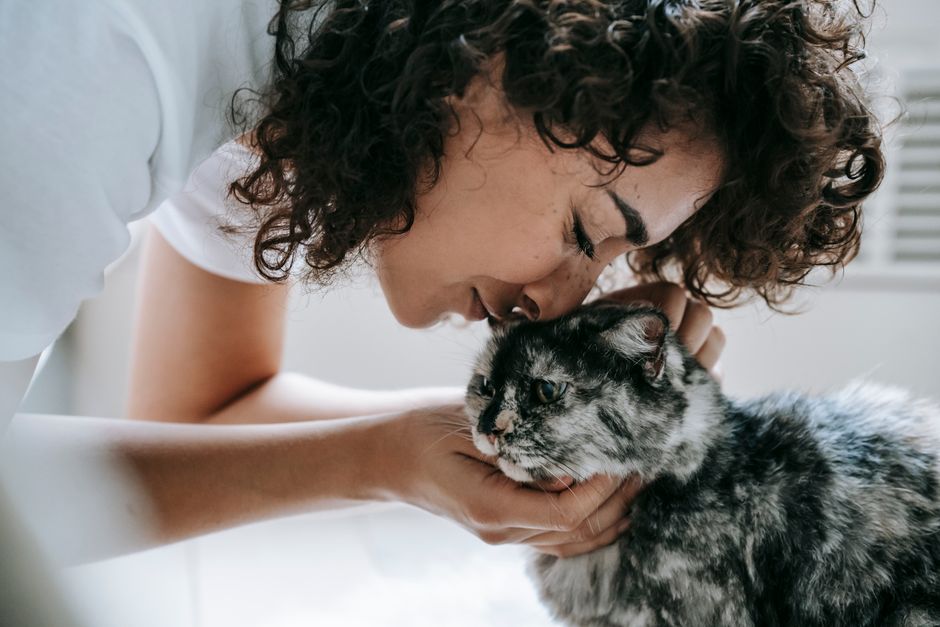
Signs Your Cat Loves You
Photo by Sam Lion on Pexels
This content was created with AI assistance and is not a substitute for professional veterinary advice.
Cats show love differently than dogs do – mostly through quiet signals like a slow blink, a head bump, or simply choosing to be near you, not big obvious displays. The signs are real and research-backed, just easy to miss if you’re expecting something more dramatic.
The Slow Blink: A Cat’s Version Of “I Love You”
This one has real science behind it. Catster cites a 2020 study finding that “cats were more likely to slow blink after their owners slow blinked at them” – and when an unfamiliar researcher slow blinked at a cat, that cat was more likely to approach the person’s outstretched hand afterward. It’s a genuine trust signal: slow blinking means a cat is willingly lowering its guard in a vulnerable moment, specifically because it feels safe with you. You can reciprocate it directly – look at your cat, close your eyes gradually, hold for a second or two, then open them again.
Head Bunting: Marking You As Family
When a cat rubs its head or face against you, it’s not just affection – it’s active scent-marking. Care.com quotes cat behavior expert Dr. Zazie Todd: “when cats rub their head like that they are depositing pheromones from glands on their neck and head.” Cats have scent glands concentrated in the chin, cheeks, and forehead, so a head bunt is your cat literally marking you as part of its social group – not so different from the same behavior cats use to mark territory with each other.
Reading Tail Position
A cat’s tail communicates mood clearly once you know what to look for. Care.com describes the happy signal specifically: a tail held straight up with a slight curve at the tip, sometimes accompanied by winding around your legs. This is a distinct signal from dog tail-wagging – it’s a calm, upright posture rather than rapid motion.
The Belly Display (And Why It’s Not An Invitation)
A cat rolling over to expose its belly is showing real trust – the belly is a vulnerable area, and offering it up means a cat feels genuinely safe around you. But Care.com is specific about an important nuance: this display “doesn’t necessarily mean they want belly rubs.” It’s a trust signal first, not automatically an invitation to touch – reaching for the belly anyway is a common way people get swatted or nipped by a cat that was just relaxing, not asking for contact.
What Each Sign Actually Means
| Sign | What It Signals |
|---|---|
| Slow blink | Trust, feeling safe with you |
| Head bunting | Scent-marking you as family |
| Tail up, curved tip | Happy, positive mood |
| Belly exposed | Deep trust – not necessarily a request for touch |
| Sitting nearby without contact | Comfort and companionship, even from shy cats |
Quiet Signs: Just Being Near You
Not every affectionate cat is a lap cat, and that’s worth remembering. Care.com points out that shyer cats often show affection simply through proximity – watching you work from across the room, or choosing to sit in the same space without seeking direct contact. This still counts as a real sign of comfort and attachment; it just looks different from a cat that climbs into your lap constantly.
Signs That Aren’t Always About Love
A few well-known “affection” behaviors are more complicated than they first appear, and worth reading in context rather than assuming they always mean the same thing. Kneading traces back to nursing behavior in kittens and usually does signal comfort, but it can also show up as self-soothing during mild stress. Licking is often affection and scent-bonding, but frequent, focused licking aimed at one spot on a cat’s own body can point to stress or a medical issue rather than contentment. The behavior itself isn’t the full story – context (is your cat relaxed generally, or does something seem off) tells you more than any single gesture in isolation.
Key Takeaways
- Slow blinking is a research-backed trust signal – reciprocating it (a slow, deliberate blink back) is a real way to communicate the same thing to your cat.
- Head bunting is active scent-marking through glands in the chin, cheeks, and forehead – your cat is literally marking you as family.
- A tail held up with a curved tip signals a happy, relaxed mood – distinct from the rapid wagging dogs use.
- A cat showing its belly is a genuine trust signal, but not necessarily a request for a belly rub – reach carefully.
FAQ
Do all cats show affection in the same way?
No – individual personality and early life experience both shape how a specific cat expresses affection, so some lean heavily on physical closeness while others stick to quieter signals like slow blinking or simply staying in the same room. Comparing your cat to a friend’s more physically affectionate cat isn’t a useful measure of how much your own cat cares.
Is it a bad sign if my cat never wants to sit on my lap?
Not at all – lap-sitting is just one specific way cats show closeness, and plenty of genuinely affectionate cats prefer sitting nearby, following you room to room, or head-bunting instead. Focus on the pattern of signals your particular cat does show rather than expecting every cat to express affection the same way.
Can a cat’s affection toward me change over time?
Yes, in both directions – life changes (a move, a new pet, a schedule shift), age-related changes, or simply a deepening bond over time can all shift how affectionate a cat seems. A gradual increase is usually just growing trust, while a sudden decrease in normal affectionate behavior is worth paying attention to as a possible sign of stress or a health issue.