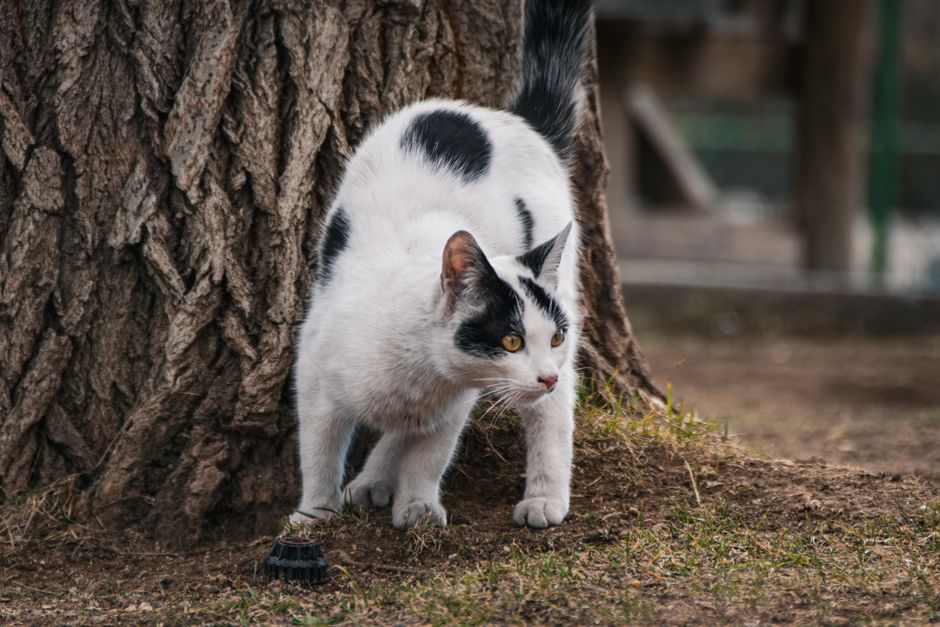
Cat Body Language Chart
Photo by Talha Uğuz on Pexels
This content was created with AI assistance and is not a substitute for professional veterinary advice.
No single signal tells the whole story with a cat. According to PetMD, reading cat body language means considering “everything that’s going on around the cat” – tail, ears, eyes, whiskers, and posture all need to line up before you know what’s actually being communicated.
Why One Signal Alone Can Mislead You
Dilated pupils on their own could mean fear, excitement, or just low light – not a fixed meaning by themselves. The same goes for a flicking tail, which can mean focused play-stalking or genuine irritation depending on what the ears and posture are doing at the same time. Reading multiple signals together is what actually turns individual body parts into a reliable read on a cat’s mood.
Tail Language Chart
| Tail Position | What It Means |
|---|---|
| Straight up with a curl at the tip | Happy and confident – PetMD calls this “a reliable sign” |
| High, curved, approaching | Friendly, per Embrace Pet Insurance |
| Flicking side-to-side while stalking | Playful, focused |
| High and flicking rapidly | Defensive or aggressive |
| Held close to body or low | Stressed, anxious |
| Wrapped tightly around or underneath the body | Fearful, or possibly in pain |
Ear Language Chart
| Ear Position | What It Means |
|---|---|
| Upright, facing forward | Happy, relaxed, or interested |
| Rotated to the sides (“airplane ears”) | Stressed or anxious |
| Angled backward or sideways | Fearful – PetMD notes “the further back a cat’s ears are pinned, the more terrified they are” |
| Turned back or flat against the head | Aggressive or defensive |
| Held low or rotated to the sides, persistently | Possible sign of illness |
Eyes And Pupils Chart
| Eye Signal | What It Means |
|---|---|
| Round or partially closed, narrow pupils | Content, relaxed |
| Slow blink | Trust and affection – considered a genuine positive signal by both PetMD and Embrace |
| Wide eyes, dilated pupils, playful posture | Excited or in play mode |
| Widened, dilated pupils, tense posture | Fearful |
| Narrowed with a direct, fixed stare | Can signal aggression |
| Squinted, held shut, or appearing dazed/glassy | Possible pain or illness |
Whiskers And Body Posture Chart
| Signal | Relaxed/Happy | Fearful/Stressed | Aggressive/Defensive |
|---|---|---|---|
| Whiskers | Relaxed, protruding normally | Pulled back flat against the face | Forward, appearing to stand on end |
| Body | Loose, stretched out, limbs relaxed | Crouched low, making itself smaller | Arched back, fur bristled, standing tall |
| Movement | Head held high, easy walking | Very still, or ready to bolt | Stiff, tense, deliberate |
Vocalizations Worth Knowing
- Purring – usually contentment, but PetMD notes cats can also purr when in pain, so purring alone isn’t proof a cat is comfortable.
- Chirping or trilling – a short, high-pitched, typically friendly greeting sound.
- Meowing – meaning varies with pitch and context; it’s a cat-to-human communication style more than a cat-to-cat one.
- Yowling – per Embrace, can indicate “distress, discomfort, or territorial concerns.”
- Hissing or growling – a clear sign of fear, anger, or a defensive warning; PetMD describes hissing as “mostly an involuntary reflex” rather than a deliberate threat.
Putting Signals Together
A relaxed cat typically shows forward ears, a loosely held or gently curled tail, round or slit eyes, and normally positioned whiskers – all at once. A cat that’s about to become defensive usually shows the opposite across the board: flattened ears, bristled fur, forward or flattened whiskers, and a stiff, arched posture. When the signals genuinely conflict with each other, that’s usually a cat in transition between states – worth watching rather than immediately interpreting, since context (what just happened, who else is in the room) fills in the rest.
When To See A Vet
Cats are known for masking illness, so a consistent shift in body language – not just a one-off moment – is the real signal to watch. PetMD flags a specific cluster worth taking seriously: a hunched posture with legs tucked underneath, squinted or glassy eyes, ears held low, a tail wrapped tightly around the body, increased hiding, uncharacteristic aggression, decreased energy, or changes in appetite or grooming. Any of these persisting beyond a single incident is worth a vet visit rather than assuming it’s just a mood or a passing stressor.
Key Takeaways
- No single body part tells the full story – tail, ears, eyes, whiskers, and posture need to be read together for an accurate read on a cat’s mood.
- A relaxed cat shows forward ears, a loose body, round or slit eyes, and normal whiskers all at the same time; a defensive cat shows the opposite across the board.
- Purring doesn’t always mean contentment – cats can purr while in pain, so it isn’t a reliable standalone signal.
- A persistent cluster of signals like hunching, glassy eyes, low ears, and reduced appetite points to possible illness and is worth a vet visit rather than a behavioral explanation.
FAQ
Does a wagging or flicking tail mean the same thing in cats as it does in dogs?
No – unlike a dog’s wag, which is often a friendly signal, a cat’s rapidly flicking or thrashing tail usually signals irritation, overstimulation, or agitation, not happiness. A slow, gentle tail sway during play or a high tail with a curled tip approaching you are the more reliable positive tail signals in cats.
If my cat is purring, does that mean it’s definitely comfortable and not in pain?
Not necessarily – cats can and do purr while injured or in pain, so purring on its own isn’t proof of comfort. Checking purring against other signals (posture, ear position, eye appearance) gives a much more reliable read than purring alone.
What’s the difference between a cat’s fearful posture and its aggressive posture?
A fearful cat typically tries to look smaller – crouching low, tail wrapped tightly, ears back, trying to become less noticeable. An aggressive or defensive cat typically does the opposite, trying to look bigger – arching its back, bristling its fur, and standing tall. Both can involve flattened ears and dilated pupils, which is exactly why checking the whole posture matters more than any single signal.