How to Calm an Anxious Dog: A Vet-Backed Guide
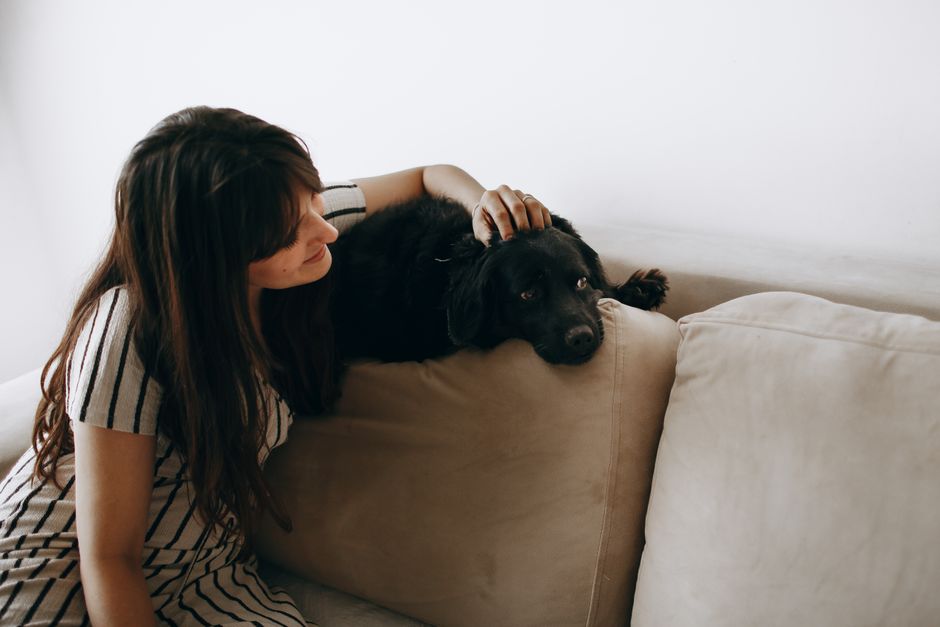
Photo by Helena Lopes on Pexels
This content was created with AI assistance and is not a substitute for professional veterinary advice.
Calming an anxious dog starts with identifying which type of anxiety it actually is – separation, fear/situational, or age-related – since the fix that works for one often does little for another; from there, a predictable routine, a safe retreat space, and gradual desensitization to triggers do most of the work, with medication reserved for cases training alone can’t handle.
Recognizing Anxiety In Dogs
Anxiety doesn’t always look like obvious panic. According to PetMD, physical signs range from mild – lip licking, yawning, avoiding eye contact – up to more severe indicators like trembling, dilated pupils, and teeth-showing. Behaviorally, PetMD lists destructive behavior, excessive barking or whining, loss of appetite, and regressive house-training accidents as common signs. The AKC adds pacing, restlessness, drooling, panting, and repetitive or compulsive behaviors to that list – and is direct that aggression is the most serious symptom, since it can put people and other animals at risk.
The subtle signs matter as much as the dramatic ones. A dog quietly lip-licking or looking away in a specific situation is often communicating discomfort well before it escalates to barking or trembling – catching it early is part of what makes calming techniques effective.
The Main Types of Dog Anxiety
Anxiety isn’t one condition with one cause. PetMD and the AKC both break it down into overlapping categories:
- Separation anxiety – both sources put this at roughly 14% of dogs, occurring when a dog feels insecure away from its family. It typically shows up specifically when a dog is left alone, not in other contexts.
- Fear-related or situational anxiety – triggered by loud noises (thunder, fireworks, construction), unfamiliar people or animals, vet visits, car rides, or new environments.
- Age-related anxiety – the AKC links this to cognitive dysfunction syndrome in senior dogs, which it compares to early-stage Alzheimer’s in humans.
- Medical causes – PetMD notes pain, dental disease, and arthritis can all produce anxiety-like behavior, which is why ruling out a physical cause matters before assuming it’s purely behavioral.
Anxious Moment vs Anxiety Disorder
| Sign | Situational Nervousness | Anxiety Worth Addressing |
|---|---|---|
| Trigger | Clear, specific (a thunderstorm, a vet visit) | Broad, frequent, or unclear |
| Duration | Resolves once the trigger passes | Persists or escalates over time |
| Behavior | Mild – lip licking, brief avoidance | Destructive behavior, aggression, house-training regression |
| Pattern | Occasional | Happens most days, or is getting worse |
Calming Techniques That Actually Work
- Set up a safe, quiet retreat. Both PetMD and the AKC point to a consistent safe space – a crate or a specific quiet area with a comfortable bed – a dog can go to when anxious.
- Keep routines predictable. A consistent daily schedule for feeding, walks, and attention reduces the general uncertainty that feeds anxiety.
- Use desensitization and counterconditioning. Both sources recommend gradually exposing a dog to a trigger at a low intensity while pairing it with something positive, slowly building tolerance rather than avoiding the trigger entirely or overwhelming the dog with it.
- Keep arrivals and departures low-key. For separation anxiety specifically, PetMD recommends calm, unemotional comings and goings rather than big greetings or goodbyes that make the contrast (alone vs. not alone) more dramatic.
- Prioritize daily exercise and mental enrichment. Both sources list this as a real lever – a physically and mentally tired dog has an easier time settling.
- Reward calm behavior directly, rather than only reacting once a dog is already anxious – this reinforces the state you actually want more of.
- Consider pheromone diffusers or vet-approved calming supplements (PetMD specifically mentions alpha-casozepine-based supplements and synthetic maternal pheromones) as a supportive layer alongside training, not a replacement for it.
When Medication Might Help
For more severe or persistent anxiety, both sources note medication is a real option – not a first resort, but not something to rule out either. PetMD and the AKC both mention vets may prescribe SSRIs or antidepressants (fluoxetine or clomipramine are named specifically) for ongoing anxiety, or short-term medications like diazepam for specific situational triggers (a vet visit, a known fireworks night). The AKC adds a caution worth passing along directly: CBD oil remains understudied in dogs, and any use should go through a vet rather than being self-directed.
When To See A Vet
- Anxiety that’s persistent, frequent, or getting worse rather than improving with consistent management.
- Aggression tied to anxiety – the AKC calls this the most serious sign, since it carries real safety risk.
- Anxiety that appears suddenly, especially in an older dog – PetMD notes pain, dental disease, arthritis, or cognitive dysfunction can all produce anxiety-like behavior, so a medical cause needs ruling out rather than assuming it’s purely behavioral.
- Anxiety that isn’t responding to consistent training and environmental changes after a genuine, sustained effort – this is when a vet can help identify the specific type and whether medication is worth discussing.
Key Takeaways
- Dog anxiety comes in distinct types – separation, fear/situational, age-related – and identifying which one you’re dealing with shapes which techniques will actually help.
- Subtle signs (lip licking, yawning, avoiding eye contact) often show up before more obvious ones like trembling or barking – catching them early matters.
- A safe retreat space, consistent routine, and gradual desensitization to specific triggers are the core techniques both PetMD and the AKC recommend.
- Medication is a legitimate option for more severe cases, prescribed and guided by a vet – not something to start without one, and not something to rule out either.
FAQ
Is occasional nervousness the same thing as an anxiety disorder in dogs?
No – brief, situational nervousness tied to a specific trigger (like a loud noise) that resolves once the trigger passes is normal. It becomes worth addressing as anxiety when it’s frequent, broad, escalating, or shows up as destructive behavior, aggression, or house-training regression.
Can early socialization actually prevent anxiety in puppies?
It can meaningfully reduce the risk. The AKC points to proper socialization and obedience training during puppyhood as a preventive measure, since exposing puppies to a range of people, animals, and situations early on helps build tolerance before fear patterns set in.
Do calming supplements and CBD actually work for dog anxiety?
It depends on the product – PetMD names specific ingredients like alpha-casozepine and synthetic pheromones as supportive options, but the AKC is clear that CBD oil remains understudied in dogs specifically. Either way, running it by a vet first is worth doing rather than assuming any calming product is automatically safe or effective.