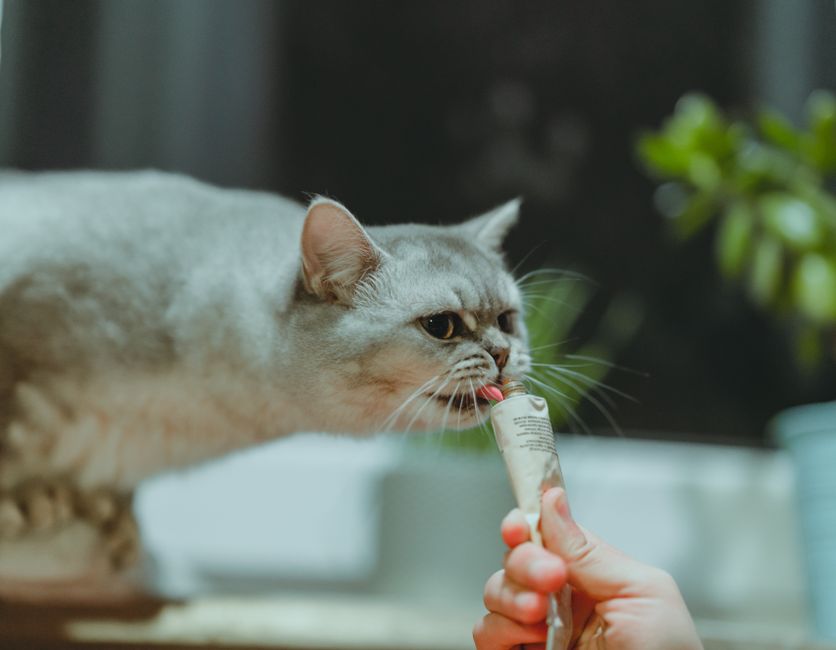
Why Does My Cat Lick Me? What It Actually Means
Photo by Anjie Qiu on Pexels
This content was created with AI assistance and is not a substitute for professional veterinary advice.
A cat licking you is almost always a form of affection or social bonding – the feline equivalent of the grooming mother cats give kittens – and on its own it’s a sign of trust, not a problem to fix.
The Real Reasons Your Cat Licks You
Vets and behavior researchers point to a consistent set of explanations, not one single cause:
- Affection and bonding. Licking is an “affiliative behavior” – the same grooming cats use to strengthen bonds with kittens and other cats in their social group, according to PetMD.
- Scent marking. By leaving saliva on you, your cat is blending your scent into the group’s shared smell, marking you as part of their trusted circle rather than a stranger.
- Attention-seeking. If licking reliably gets you to pet, talk to, or feed your cat, they’ll repeat what worked – this is learned behavior, not a separate instinct.
- Leftover kitten behavior. Cats weaned early sometimes lick for the same comfort nursing provided, often paired with kneading and purring.
- Taste and curiosity. Lotion, salty sweat, or an unfamiliar scent on your skin can be enough on its own to draw a curious lick.
- Self-soothing. Licking releases endorphins, so a cat may lick you (or itself) as a calming behavior when mildly stressed – this is the one worth watching if it becomes frequent or intense.
What Licking Says About Your Bond
A cat’s tongue is covered in “hundreds of tiny, firm, backward-facing spines called papillae,” which is exactly why a cat’s lick feels like light sandpaper rather than a smooth swipe, per PetMD. Those papillae exist to work loose fur free and spread saliva for cooling during self-grooming – when your cat uses that same tool on you, they’re extending a behavior otherwise reserved for cats (and kittens) they trust. Occasional licking is a genuinely good sign about your relationship, not something to discourage out of habit.
Normal Licking vs. a Stress Signal
| Type | What It Looks Like | What It Means |
|---|---|---|
| Affectionate grooming | Slow, relaxed licking on your hand, arm, or hair, often with purring | Bonding, trust |
| Attention-seeking | Persistent licking that stops once you respond | Wants food, play, or contact |
| Taste-driven | Brief, focused licking on lotion, sweat, or a specific spot | Curiosity about a scent/taste |
| Self-soothing / displacement | Repetitive, almost automatic licking of you or itself, sometimes paired with over-grooming bald patches on the cat | Stress or anxiety |
What To Do About It
- Let normal affectionate licking happen – there’s no medical reason to stop a cat from occasionally licking your hand or arm.
- Redirect attention-seeking licking by responding to calm behavior instead of the lick itself, the same principle used for any attention-seeking habit.
- Keep lotions, essential oils, and topical medications off skin your cat can reach, and check with your vet before applying anything a curious cat might lick off.
- Don’t let your cat lick open cuts, scrapes, or wounds – bacteria in saliva can cause infection even though the behavior itself is affectionate.
- Watch your cat’s own grooming, not just the licking aimed at you. If a cat that licks you a lot also starts over-grooming itself – focused licking that causes hair loss or bald patches – that’s the pattern that points to stress or a medical issue, not the licking directed at you.
When To See A Vet Immediately
According to the Cornell Feline Health Center, cats normally spend 30 to 50 percent of their day grooming themselves, so the concern isn’t licking in general – it’s a shift in pattern. See a vet if:
- Licking is focused intensely on one area of your cat’s own body, which can point to localized pain
- You notice hair loss, bald patches, or broken/irritated skin from self-grooming
- Licking is producing an unusual number of hairballs
- The behavior started alongside a stressful change – a move, a new pet, a schedule shift – and hasn’t settled after a few weeks
Cornell notes that stress-related overgrooming, once identified and addressed, typically improves within about a month with the right environmental changes or veterinary guidance – so it’s worth raising with a vet rather than waiting it out indefinitely.
Ways To Support a Calmer, Less Anxious Cat
- Vertical space (cat trees, shelves) gives an anxious cat more places to retreat and observe safely.
- Daily interactive play channels energy that might otherwise come out as displacement licking.
- A consistent routine for feeding and attention reduces the uncertainty that often underlies stress licking.
- Grooming tools (a soft brush) can substitute a bonding ritual for a cat that licks you mainly for attention, without training out affection entirely.
Key Takeaways
- Most licking is affection, scent-bonding, or attention-seeking – it’s a sign of trust, not a behavior to eliminate.
- A cat’s tongue is covered in backward-facing papillae, which is why licks feel rough – the same structures cats use for self-grooming.
- The behavior to actually watch for is your cat over-grooming itself to the point of hair loss or skin irritation, which points to stress or a medical cause.
- Cats normally groom 30-50% of the day; sudden changes in that pattern, not licking itself, are what warrant a vet visit.
FAQ
Why does my cat’s tongue feel so rough when it licks me?
Cat tongues are covered in hundreds of tiny, backward-facing spines called papillae, which give them a sandpaper-like texture. These evolved to comb loose fur out during self-grooming, not specifically to lick people, which is why the sensation can feel more abrasive than a dog’s lick.
Should I let my cat lick my face?
Occasional face licking isn’t dangerous for most healthy people, but it’s reasonable to discourage it near your mouth or eyes, since cat saliva can carry bacteria that pose a small infection risk, particularly for anyone with a weakened immune system.
Why does my cat only lick certain people in the house?
Cats tend to direct affiliative licking toward whoever they feel most bonded to or safest with, which can be tied to who feeds them, spends the most calm one-on-one time with them, or simply matches their preferred handling style – it’s a preference, not favoritism in a human sense.