How to Tame a Budgie
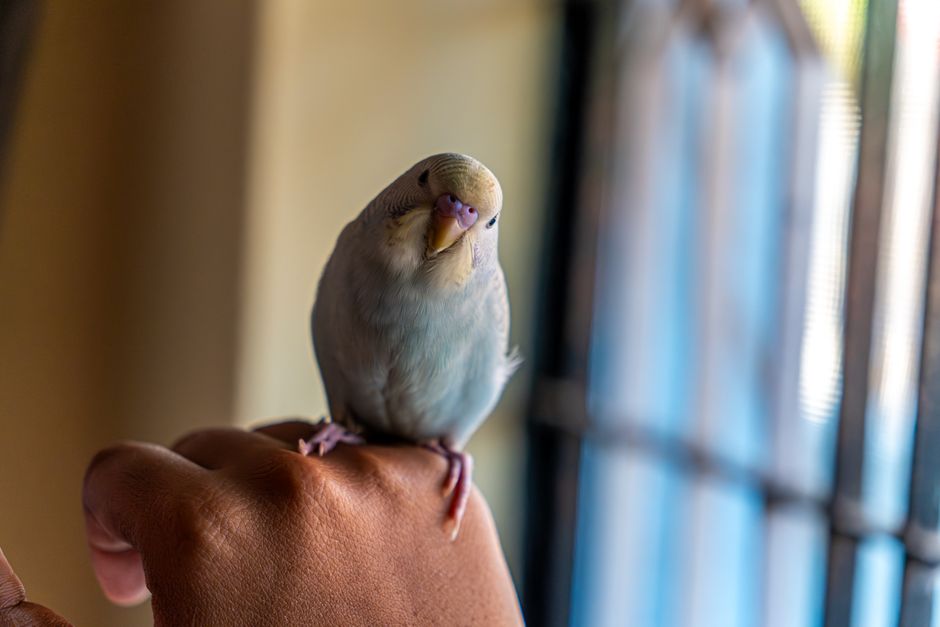
Photo by Sridhar Error on Pexels
This content was created with AI assistance and is not a substitute for professional veterinary advice.
Taming works through patience and predictability, not speed. According to Golden Valley Animal Hospital, “budgies are prey animals, so sudden grabbing or loud noises can be frightening” – the whole process is built around never giving a budgie a reason to feel unsafe.
Start With Space, Not Contact
Before any hands-on interaction, give a new or nervous budgie 24-48 hours simply to settle into its space without being approached directly. During this window, talk softly nearby and offer millet through the cage bars – this establishes your presence as calm and non-threatening before you ever attempt direct contact.
The Step-By-Step Process
- Settle in first. Let the bird get used to your voice and presence near the cage before doing anything else.
- Offer millet through the bars. This starts building a positive association with you specifically, not just with the cage environment.
- Place your hand inside the cage without moving it. No reaching, no chasing – just presence. Let the budgie get comfortable with a still hand being there.
- Offer millet from your fingers. Once the hand itself isn’t alarming, food offered directly from your fingers moves the association a step closer.
- Introduce the “step up” cue with gentle pressure against the chest/legs. This is the actual finger-training step – gently pressing a finger against the lower chest encourages a budgie to step onto it as a natural balancing response.
Each stage should feel boring and uneventful before you move to the next one – if a step still causes a strong reaction, that’s the signal to stay at that stage longer, not push forward.
Why Young Budgies Tame Faster
Age matters here. Budgies under about 16 weeks old are generally the easiest to tame and adapt to a new environment – younger birds simply have less established wariness to work through. That doesn’t mean an older or previously untamed budgie can’t be tamed at all, just that the same process will likely take longer and require more patience at each stage.
Taming Stages At A Glance
| Stage | What It Looks Like |
|---|---|
| Settling in | No handling – just calm presence and soft talking nearby |
| Building association | Millet offered through cage bars |
| Hand tolerance | Still hand placed inside the cage, no movement |
| Direct trust | Millet offered from fingers |
| Step-up training | Gentle chest pressure to encourage stepping onto a finger |
Keep Sessions Short And Positive
Short sessions work better than long ones – a general guideline is 5 to 10 minutes per session, ending on a positive note rather than pushing until the budgie seems tired or agitated. Repeated short, upbeat sessions build trust more reliably than occasional long ones.
The Mistake That Sets Taming Back
This is worth being direct about: chasing a budgie around the cage or forcing interaction when it’s clearly resistant doesn’t speed anything up. It “breaks trust and prolongs the taming process” – exactly the opposite of the intended effect. If a budgie is actively trying to get away, the right response is backing off and trying again later, not persisting until it has no choice but to comply.
Reading Your Budgie During Training
A budgie that’s tolerating a step calmly – staying still, continuing to eat, not fleeing to the far side of the cage – is ready to move forward. One that’s repeatedly retreating, staying tense, or showing no interest in the offered treat needs more time at the current stage before advancing. There’s no fixed schedule that applies to every bird; the budgie’s own comfort level at each step is the actual pace-setter.
Key Takeaways
- Taming starts with space and calm presence, not direct contact – give a new or nervous budgie 24-48 hours to settle first.
- The process moves in small, deliberate steps: presence, millet through bars, a still hand in the cage, millet from fingers, then the step-up cue.
- Young budgies (under 16 weeks) tame fastest, but older or previously untamed budgies can still be tamed – it just takes longer.
- Chasing or forcing interaction actively breaks trust and slows the process down – patience genuinely is the faster path here, not the slower one.
FAQ
Does taming two budgies together take longer than taming one?
Often yes in practice, since bonded budgies tend to rely on each other for security and have less motivation to seek out human interaction compared to a single bird. It’s still very possible – just expect it to take more patience and consistency than taming a lone budgie.
Is it ever too late to tame an older, skittish budgie?
No – age and prior experience can make the process slower, but it doesn’t rule it out. The same step-by-step approach still applies; an older, more wary budgie just needs more repetitions at each stage before it’s ready to move forward, rather than a fundamentally different method.
Does clipping a budgie’s wings make taming easier?
It’s not a recommended shortcut for taming specifically – trust-building through patience and positive association is what actually drives the process, not limiting a bird’s ability to fly away. Wing trimming is a separate decision with its own considerations, best discussed with an avian vet rather than used as a taming technique.