Why Does My Cat Purr So Much?
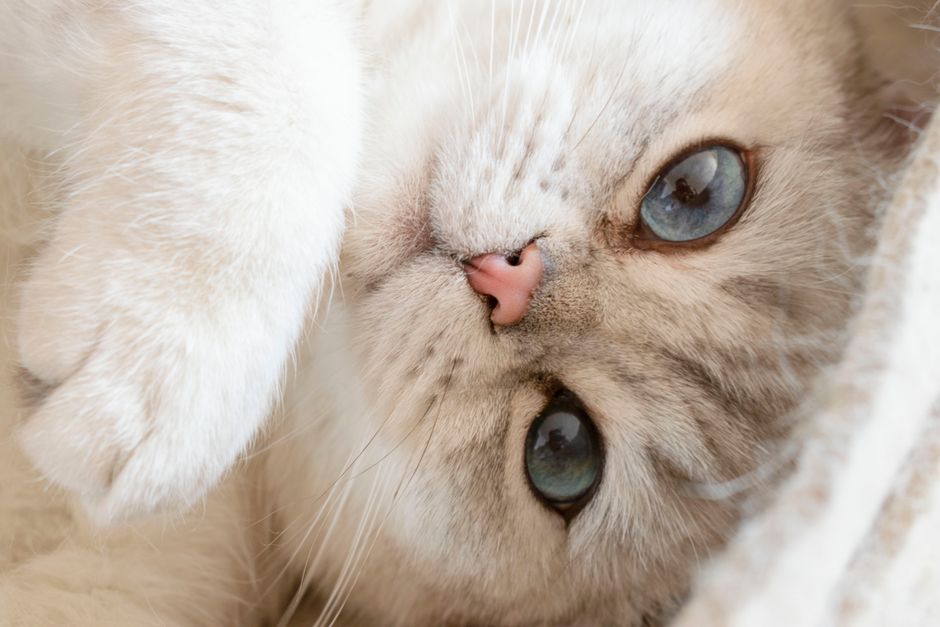
Photo by Maxine Xin on Pexels
This content was created with AI assistance and is not a substitute for professional veterinary advice.
Purring isn’t purely a happiness signal – cats also purr to self-soothe during stress or pain and to communicate specific requests, so a purring cat isn’t automatically a content one; context (what’s happening around the purring) tells you more than the sound itself.
How Purring Actually Works
According to WebMD, a neural oscillator in a cat’s brain sends rhythmic signals to the laryngeal muscles, causing them to vibrate during both inhaling and exhaling – which is what produces the steady, continuous sound rather than something that only happens on the exhale. Scientific American confirms the same mechanism and the same frequency range: roughly 25 to 150 Hertz.
It’s Not Always About Happiness
The contentment explanation is the most familiar one, but Scientific American is direct that it isn’t the full picture: cats also purr during vet visits, injury recovery, labor, and even while dying – situations that have nothing to do with pleasure. WebMD frames this as a stress response similar to “nervous smiling” in people – a self-soothing behavior rather than a sign that everything is fine. Scientific American goes as far as concluding it’s “more plausible that cat purring is a means of communication and a potential source of self-healing” than simply an expression of happiness on its own.
The Purr That’s Actually A Request
Some purring is a direct ask, not a mood. WebMD describes “solicitation purring” – cats embedding a higher-frequency cry within the purr specifically to prompt a feeding response from their owner. It’s a learned, effective strategy: that embedded cry is thought to trigger the same instinctive response humans have to an infant’s cry, which is part of why it’s so hard to ignore. This connects back to kittens, who WebMD notes begin purring shortly after birth as part of bonding and communication with their mother.
Reading What A Purr Actually Means
| Context | Likely Meaning |
|---|---|
| Relaxed body, slow blinking, being petted | Contentment |
| Insistent, paired with a higher-pitched cry, near mealtime | Solicitation – a direct request |
| At the vet, during recovery, or an unfamiliar situation | Self-soothing under stress |
| Purring paired with hiding, tension, or reduced appetite | Possible pain or illness, not comfort |
The Healing Frequency Theory
One of the more interesting theories is that purring itself may support physical healing. Scientific American notes that “sound frequencies in this range can improve bone density and promote healing,” and veterinary behaviorist Benjamin Hart is quoted in WebMD’s coverage: “It’s probably no accident that this frequency is also used in humans to help wounds heal faster.” Scientific American goes further, floating the idea that this could help explain why cats tend to have fewer skeletal problems than dogs.
It’s worth being clear about how solid this is: both sources present the healing theory as a plausible hypothesis, not an established fact – it’s an evolutionary explanation for why self-soothing through purring during illness or injury might carry a real physical benefit, not a confirmed medical mechanism.
When Purring Is Actually A Warning Sign
Because purring can be a stress response rather than a happiness one, it’s worth watching for context rather than assuming purring always means “all is well”:
- Purring paired with hiding, reduced appetite, or reluctance to move can point to pain or illness rather than comfort – this combination is worth a vet visit.
- A sudden increase in purring during handling or specific movements can signal discomfort in that area, similar to how injured or recovering cats purr more.
- Purring alone, with normal appetite, energy, and relaxed body language, is the pattern that genuinely does mean contentment – no cause for concern.
Key Takeaways
- Purring comes from a neural oscillator triggering vibration in the laryngeal muscles at 25-150 Hz – the same mechanism whether the cat is content or stressed.
- Purring isn’t only a happiness signal – cats also purr to self-soothe during stress, pain, injury, and even labor.
- “Solicitation purring” embeds a higher-pitched cry specifically to prompt feeding – it’s a learned request, not just a mood.
- The idea that purring frequencies support healing is a real but still-speculative theory, not a confirmed medical fact – treat it as plausible, not proven.
FAQ
Can all cats purr, or is it breed-specific?
Nearly all domestic cats can purr, though volume and how easily it’s heard vary a lot between individuals. It’s the big wild cats (lions, tigers) that generally can’t purr the way domestic cats do, due to differences in their laryngeal structure.
Does a cat’s purring actually benefit the person listening to it?
There’s real support for this – WebMD notes that purring can lower stress and blood pressure in the people who hear it, contributing to relaxation. It’s part of why being around a purring cat often feels calming even beyond simple enjoyment of the sound.
Why does my cat purr and drool at the same time?
It usually shows up together because both are signs of a deeply relaxed state – some cats drool specifically when they’re purring contentedly, similar to how kittens salivate while nursing. It’s generally harmless in an otherwise healthy, relaxed cat, though it’s worth a vet check if drooling happens without the relaxed context or seems excessive.